
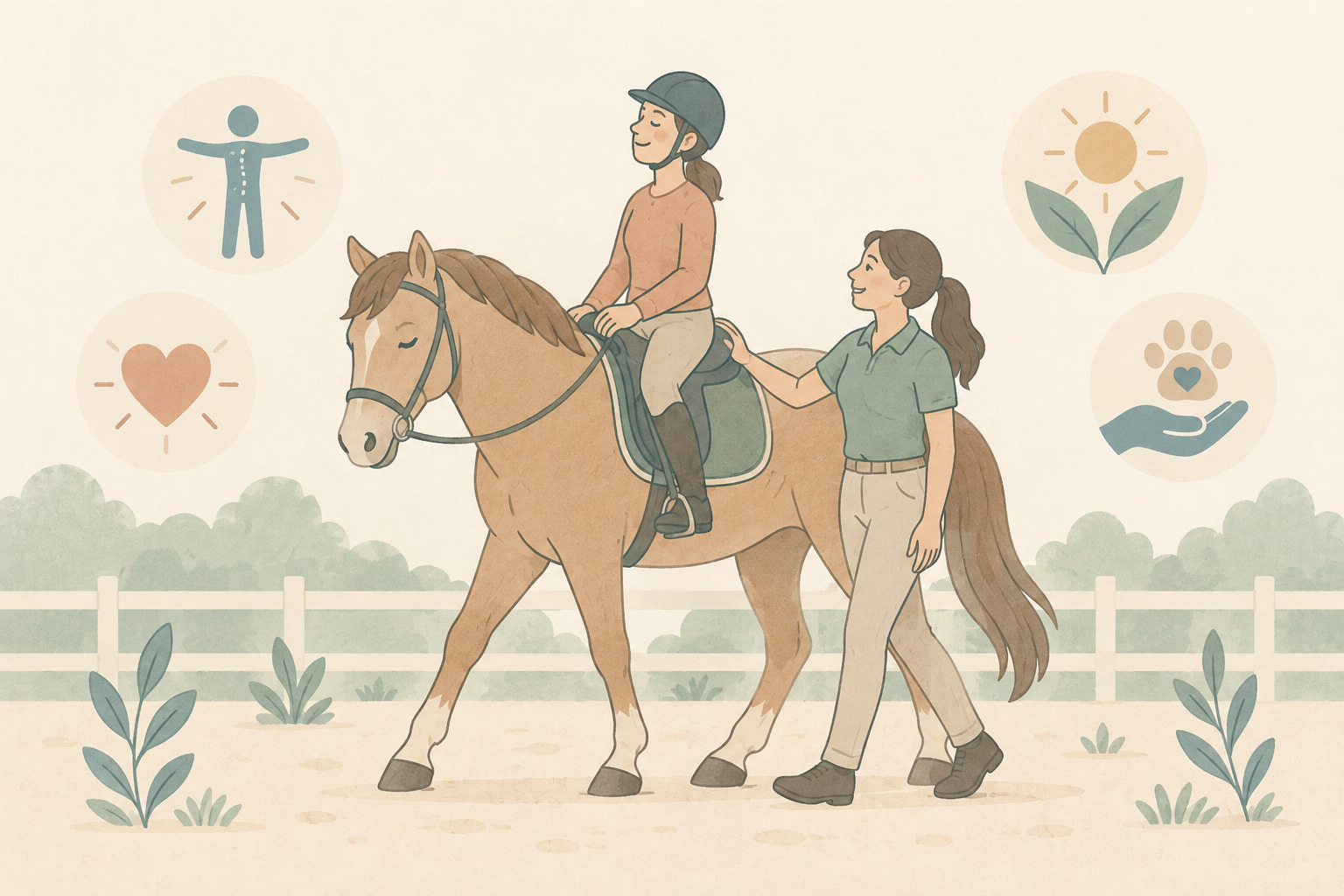
The use of horses in rehabilitation programmes combines physical activity, sensory stimulation, and interaction with an animal. During sessions, a person responds to the horse's movements, maintains body position, continuously adjusts balance, performs exercises, and interacts with a specialist. Depending on the goals of the programme, the focus may be on physical functions, everyday activities, communication, or psychological and emotional well-being.
At the same time, it is important to distinguish the terminology correctly. In professional rehabilitation, hippotherapy refers to the purposeful use of the horse's movement as part of a specialist's work, while broader programmes involving interaction with horses may include therapeutic riding, psychological interventions, and other formats. This distinction is important for correctly evaluating the possible outcomes of sessions. The American Hippotherapy Association defines hippotherapy as the use of equine movement by physical therapists, occupational therapists, and speech-language professionals to achieve specific functional goals.
What Is Hippotherapy?
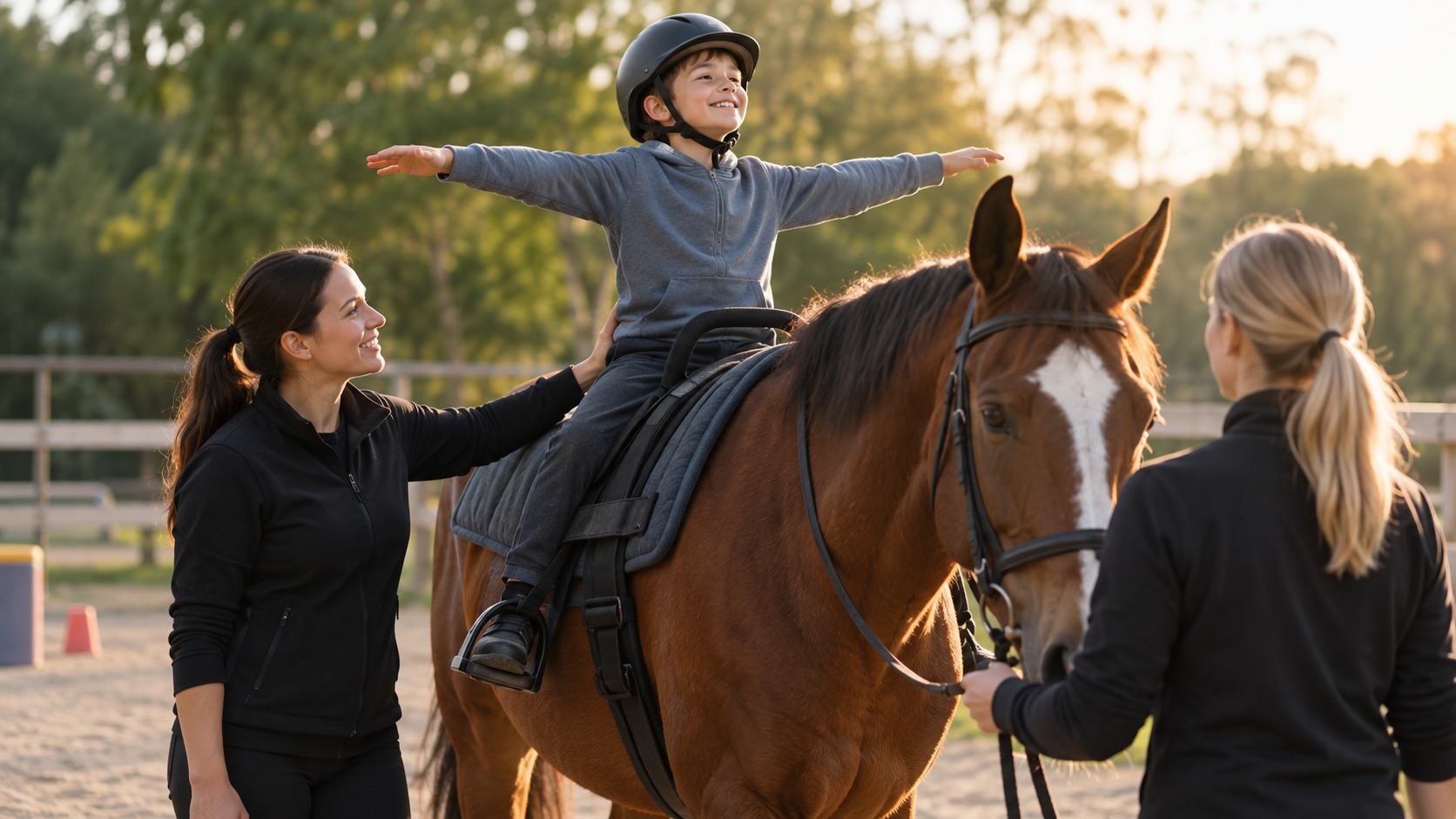
Simply put, hippotherapy is the use of controlled horse movement as a therapeutic tool within professional rehabilitation. A person is not simply learning how to ride. The specialist selects the body position, characteristics of the horse's movement, pace, direction, and exercises according to specific functional goals.
The horse's movement creates continuous changes in the support surface. To remain stable, the person must constantly adapt the position of the trunk, pelvis, head, and limbs. This produces a large number of repeated postural responses that are difficult to reproduce accurately while simply sitting on a stationary surface. The American Hippotherapy Association also emphasises that equine movement is multidimensional and is used purposefully by the therapist according to the needs of the individual patient.
During a session, the speed and direction of the horse's movement, stride length, the person's position, and the complexity of additional tasks may be changed. This allows the specialist to regulate sensory and motor demands. The goal is not to master horse riding as a sporting skill, but to improve functions that are important in everyday life.
For this reason, the answer to the question of what hippotherapy is should not be reduced to the phrase "treatment with horses." Hippotherapy is one possible tool within comprehensive rehabilitation. It may be used alongside physical therapy, occupational therapy, work on communication, and other interventions according to the person's needs. It should not replace primary treatment, medication, surgery, psychotherapy, or other methods when they are indicated.
How Does Hippotherapy Affect the Human Body?
As the horse moves, the person's body position is constantly changing. Even when the participant appears relatively still, the nervous system continuously receives information about changes in support and body position and produces appropriate responses. Maintaining an upright position requires activation of the trunk muscles, adjustment of pelvic position, stabilisation of the head, and coordination between different parts of the body.
This type of load differs from a conventional exercise performed on a stable surface. The horse's movement is neither completely static nor monotonous, so the person must continuously adapt to small changes. This mechanism forms the basis for using hippotherapy to work on postural control, balance, and certain components of motor function.
Research has most extensively examined this effect in children with cerebral palsy. Systematic reviews describe possible improvements in gross motor function, balance, coordination, and certain gait parameters, although results depend on participant characteristics, programme duration, and the methodology of individual studies.
Effects on Muscles, Coordination, and Balance
When a horse walks, the person's body receives a series of rhythmic impulses. To maintain stability, the trunk position must be adjusted automatically. The muscles of the back, abdomen, pelvis, and other muscle groups involved in postural control participate in this process.
The specialist can modify the conditions to increase or decrease the difficulty of the task. Factors such as the horse's pace, movement trajectory, arm position, direction of gaze, or an additional movement task may all be relevant. This makes it possible to work not only on the strength of an individual muscle but also on the ability to coordinate movements and maintain stability under changing conditions.
For a person with impaired motor control, repeated practice of adaptive responses may be particularly important. The body continuously receives sensory information and responds by adjusting posture. In rehabilitation, this may be used to work on trunk control, sitting, balance, weight shifting, and other functional tasks.
However, simply sitting on a horse does not guarantee such an effect. The correct selection of the horse, speed, body position, and exercises matters, as does the therapist's ability to adapt the load gradually. This is why an ordinary horse ride should not be equated with professional hippotherapy.
Physical Rehabilitation with Hippotherapy
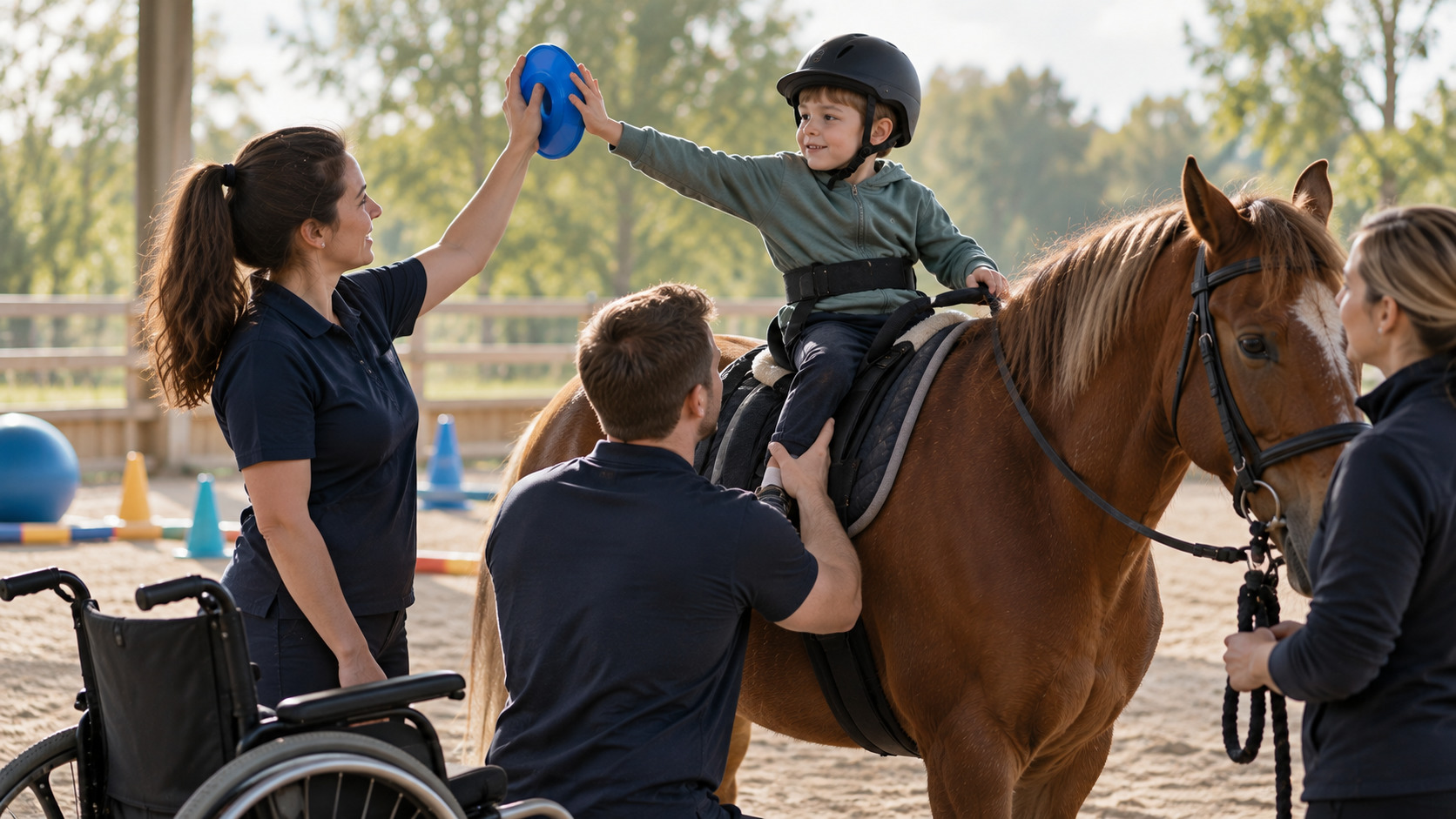
Hippotherapy may be included in physical rehabilitation programmes for people with different movement impairments if a specialist considers this tool appropriate and safe. Most scientific studies focus on neurological conditions involving difficulties with balance, trunk control, coordination, or walking.
One of the most extensively studied areas is hippotherapy for children with cerebral palsy. A recent systematic review involving 25 studies and 602 participants found improvements in several gross motor function measures, particularly those related to standing, walking, running, and jumping. At the same time, the authors noted moderate methodological quality of the evidence, small sample sizes in many studies, and the impossibility of blinding participants and therapists.
Other reviews also indicate a potential positive effect on postural control, balance, and individual components of motor function in children with cerebral palsy. However, this does not mean that hippotherapy "treats cerebral palsy." Cerebral palsy is a persistent neurological condition, and the goal of rehabilitation is to improve functioning, independence, and participation in everyday activities.
Hippotherapy has also been studied in multiple sclerosis, as well as in people with the consequences of traumatic brain injury, stroke, and other neurological conditions. The evidence here is inconsistent. For example, a systematic review of studies involving adults with acquired brain injuries did not find convincing short-term improvements in balance or gait parameters compared with control groups. This once again highlights that the method cannot be considered universal or equally effective for all patient groups.
In practical rehabilitation, suitability is determined not only by the diagnosis. The specific functional problem matters: how well the person controls the trunk, whether they can sit safely, how they respond to changes in the support surface, what goals the rehabilitation team has set, and whether those goals can be addressed through the horse's movement.
Psychological Benefits of Hippotherapy

Interaction with a horse may involve more than a physical component. For many people, sessions are emotionally meaningful, increase interest in rehabilitation, and provide an experience of active interaction that differs from conventional work in a clinic or gym.
However, it is particularly important to distinguish between different concepts here. Classical hippotherapy uses the horse's movement to achieve rehabilitation goals. Psychological programmes, by contrast, often belong to the broader category of equine-assisted interventions or equine-assisted services. These may include grooming the horse, leading it, ground-based exercises, observing the animal's behaviour, practising communication, and sometimes riding. In such programmes, the horse's movement is not always the central therapeutic mechanism.
Studies of broader equine-assisted interventions describe potential changes in emotional well-being, social interaction, and motivation to participate in activities. However, outcomes depend greatly on the specific programme and population, and the quality of the research remains inconsistent. Therefore, horse-assisted therapy should not be presented as a universal treatment for anxiety, depression, PTSD, or other psychological conditions.
Hippotherapy is not the only rehabilitation approach that uses interaction with animals. Psychological support and social rehabilitation may also include canine-assisted therapy - structured interaction with dogs within animal-assisted programmes. Depending on the format, such sessions may focus on emotional support, motivation, social interaction, or stress management. As with horses, it is important to distinguish professional therapeutic intervention from ordinary interaction with an animal: according to international principles of animal-assisted services, a therapeutic programme should be goal-oriented, structured, and delivered by an appropriately qualified specialist.
How Can Interaction with a Horse Help Reduce Stress?
During interaction with a horse, the person focuses on the current situation: their own body position, the animal's movements, the specialist's instructions, and the horse's behaviour. For some participants, this concentration may temporarily reduce emotional tension and shift attention away from anxious thoughts towards a specific activity.
Gradually developing trust may also play an important role. A horse is a large animal, so calm interaction requires predictable actions, attentiveness, and regulation of one's own behaviour. Completing simple tasks, caring for the animal, or learning how to interact with it may contribute to a sense of competence and involvement.
These mechanisms are used in psychological support programmes for veterans. For example, the US veterans' healthcare system offers psychotherapy programmes involving horses that combine contact with the animal with mindfulness practices, self-compassion, and work on interaction. At the same time, such programmes are regarded as an additional tool rather than a replacement for evidence-based treatment of mental health disorders.
Who May Benefit from Hippotherapy?
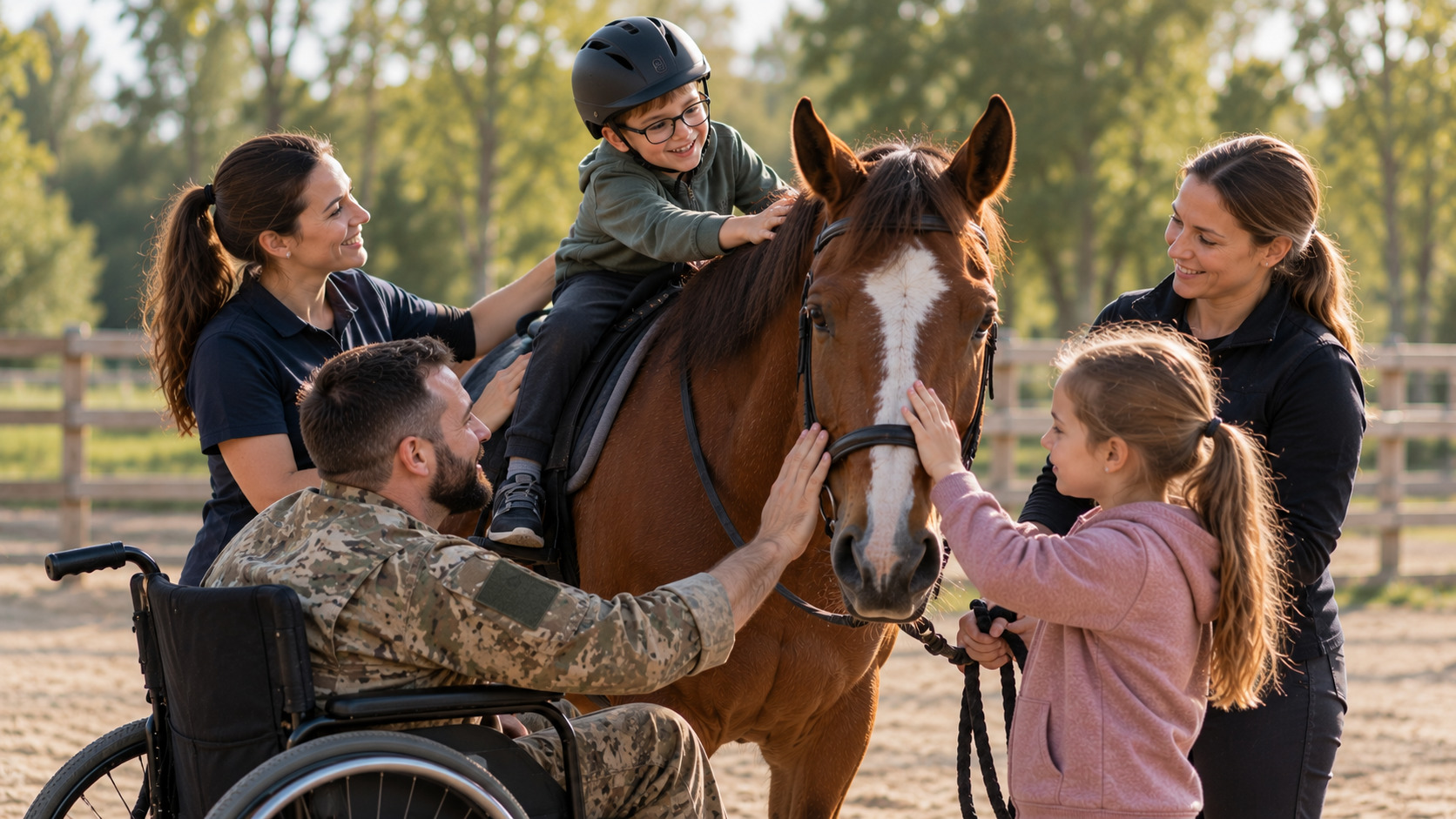
The decision to include hippotherapy in a programme is not made solely on the basis of a diagnosis. A specialist must assess functional needs, potential goals, the person's ability to interact safely with the horse, and possible contraindications.
Hippotherapy or broader horse-assisted programmes may be considered for the following groups:
- children with cerebral palsy and other conditions in which work on trunk control, balance, coordination, and gross motor skills is needed;
- children and adults with neurological impairments when the use of equine movement corresponds to their functional goals;
- people after injuries or with acquired movement impairments when a specialist considers this type of activity safe and appropriate;
- children with neurodevelopmental conditions for whom horse-assisted activities may be used as part of a broader individual programme;
- veterans and military personnel for whom horse-assisted programmes may combine physical activity, psychological support, and social interaction.
This list should not be interpreted as a set of medical indications for choosing the method independently. The same diagnosis may be associated with very different functional abilities, so the decision should always be individualised.
Two common search queries deserve separate clarification. Hippotherapy for children with autism does not have equally clear evidence when considered specifically as classical hippotherapy. A recent systematic review focused on gross motor function did not identify studies involving autism that met its strict inclusion criteria, while research on broader equine-assisted services and therapeutic riding describes possible changes in motor, social, and communication outcomes. Therefore, these findings cannot automatically be applied to every programme described as hippotherapy.
Likewise, hippotherapy for children in general should not be prescribed simply because a child likes horses. Clearly defined goals and an understanding of which component of the session is expected to help achieve them are necessary.
What Happens During a Hippotherapy Session?
A session does not begin with mounting the horse but with an assessment of the person. The therapist identifies functional difficulties, baseline motor abilities, and the goals to be addressed. These may include, for example, improving trunk control, sitting balance, coordination, or the ability to perform a specific functional task.
The specialist then selects the horse and the characteristics of its movement. Factors such as the horse's size, body width, stride pattern, temperament, and ability to work calmly in a therapeutic environment are important. The American Hippotherapy Association specifically emphasises the importance of horse selection, preparation, and welfare, as well as qualified handling.
Before the session begins, the person becomes familiar with the animal and the environment in which the session will take place. Specialists explain safety rules and help the participant assume the required position. A therapist, a professional controlling the horse, and additional assistants may work alongside the participant to ensure safety.
During the session itself, the therapist modifies the tasks according to the person's response. Different body positions, arm movements, turns, changes in the horse's direction, and other exercises may be used. The quality of responses, level of fatigue, and safety of the load are continuously assessed.
At the end of the session, the specialist evaluates the response and plans further work. The programme should not be identical for everyone. Even people with the same diagnosis may differ significantly in mobility, muscle tone, ability to maintain balance, endurance, and rehabilitation goals.
Does Hippotherapy Have Contraindications?

Hippotherapy is not suitable for everyone. It involves working with a large animal, a moving support surface, and a certain degree of physical load, so safety must be assessed before sessions begin.
The American Hippotherapy Association lists conditions that may be contraindications or require particular caution, including instability of the spine or joints, uncontrolled generalised seizures, certain severe orthopaedic problems, pathological fractures or severe osteoporosis, acute exacerbation of illness, open wounds in pressure-bearing areas, and some other conditions. Clinical studies also commonly use exclusion criteria such as uncontrolled epilepsy, severe osteoporosis, significant hip pathology, unstable concurrent illnesses, and horse allergies.
However, this list should not be used as a self-diagnosis guide. Some restrictions are absolute only in particular circumstances, while others may be relative. In addition, risk depends on the type of session, the person's condition, the equipment, and the capabilities of the team.
Before starting a programme, it is important to inform the specialist about chronic conditions, previous surgeries and injuries, seizures, joint or spinal problems, cardiovascular and respiratory diseases, allergies, and other relevant aspects of health. The final decision regarding whether sessions are appropriate should be made by a specialist who assesses the risks in the individual situation.
How Effective Is Hippotherapy?
The evidence for hippotherapy varies depending on the person's condition and the outcome being assessed. The largest amount of data relates to motor function in children with cerebral palsy: studies describe potential improvements in balance, postural control, and certain measures of gross motor function.
At the same time, small sample sizes, differences between programmes, and methodological limitations mean that the same result cannot be guaranteed for every patient. One meta-analysis comparing physical therapy with added hippotherapy against physical therapy alone rated the certainty of the evidence as very low and did not find convincing differences in some motor outcomes.
Therefore, the question "does hippotherapy work?" is better formulated more precisely: for whom, for which function, within what type of programme, and compared with what? A positive result in one study does not mean that every person will experience the same effect.
The evidence for psychological outcomes is even more heterogeneous because studies often examine broader horse-assisted programmes rather than classical hippotherapy. Some studies report promising findings relating to PTSD, anxiety, social interaction, and emotional well-being, but methods vary considerably and the quality of evidence is not always high. For this reason, horse-assisted therapy may be considered an additional component of an individual programme, but not a guaranteed alternative to standard psychological or medical care.
How to Prepare for Your First Hippotherapy Session
The first session should be approached as part of professional rehabilitation rather than as an ordinary horse ride. The main purpose of preparation is to make sure that the selected format is appropriate for the person's condition and can be carried out safely.
Before starting, several practical steps are recommended:
- Consult a doctor or rehabilitation specialist in advance, particularly if there are neurological, orthopaedic, cardiovascular, or other chronic conditions.
- Choose a centre where sessions are supervised by appropriate professionals, trained horses are used, and clear safety procedures are in place.
- Inform the team about diagnoses, previous surgeries and injuries, seizures, allergies, joint or spinal problems, and other important health considerations.
- Clarify the programme goals: which functions are expected to be trained, how outcomes will be evaluated, and how hippotherapy will be combined with other rehabilitation methods.
- Choose comfortable clothing that does not restrict movement and closed footwear that meets the requirements of the specific centre. Protective equipment should be used according to the programme's rules.
- During the first session, tell the specialist about pain, dizziness, excessive fatigue, fear, or any other unusual sensations so that the load can be adjusted promptly.
After the first session, the programme may be modified. In rehabilitation, the goal is not to make the exercises as difficult as possible, but to ensure that the load matches the intended goals and that the person can respond to it safely.
In Ukraine, horse-assisted therapy is already used in specific programmes for physical and psychological rehabilitation, including programmes for veterans. However, availability, team composition, and session formats may vary between centres, so before enrolling it is worth clarifying who delivers the programme and which rehabilitation goals it is designed to address.
Conclusion
Hippotherapy is the use of equine movement as one of the tools of professional rehabilitation. It may help address balance, coordination, postural control, and other functional skills when it is appropriate for the person's condition and aligned with the goals of their rehabilitation programme.
The largest body of scientific evidence concerns the use of the method in children with cerebral palsy, while psychological effects are more often studied within broader horse-assisted programmes. Therefore, hippotherapy should not be regarded as a universal method or as a replacement for primary treatment.
Safety and potential benefit depend on appropriate participant selection, professional qualifications, horse preparation, and individually defined goals. Before beginning sessions, it is advisable to undergo a professional assessment and make sure that the selected format genuinely complements the overall rehabilitation programme.
If you are considering hippotherapy for yourself or a loved one, start by consulting a rehabilitation specialist and choosing a centre where your condition can be assessed, the goals of the programme can be explained, and a safe format of sessions can be selected.