
The decision to euthanise a pet is one of the most difficult decisions an owner may ever face. It can be especially hard after many years together, when the animal has become a full member of the family and treatment, care, and hope for improvement have continued for months or even years. In such a situation, it is natural to have doubts, look for other options, and worry about making the decision too early.
At the same time, in veterinary medicine, euthanasia is not regarded as a way to get rid of a sick or elderly animal, but as one of the options for end-of-life care when continued life is associated with unavoidable suffering and treatment or palliative support can no longer provide an acceptable quality of life. Professional euthanasia is performed by a veterinarian under controlled conditions, with the primary aim of minimising the animal's pain, fear, and discomfort.
The decision should always be considered individually. Age alone or the presence of a serious diagnosis does not mean that an animal should be euthanised. A veterinarian assesses the animal's general condition, prognosis, level of pain, and available treatment and palliative care options, while the owner participates in the decision-making process with the pet's welfare as the main priority.
What Is Pet Euthanasia?
Pet euthanasia is a veterinary procedure intended to bring an animal's life to a controlled and humane end when continued life involves suffering that cannot be sufficiently relieved through treatment or palliative care.
The term itself comes from Greek words that literally mean "good death." In modern veterinary practice, euthanasia is not simply about stopping vital functions, but about carrying out the procedure in a way that minimises pain, fear, anxiety, and stress. This is why it should be performed by a veterinarian who can assess the animal's condition, properly organise the process, and monitor every stage.
In everyday language, people often use terms such as "putting an animal to sleep" or say that they need to "put a pet to sleep." These expressions are understandable, but they somewhat simplify the nature of the procedure. Euthanasia is a medical intervention with a specific purpose, indications, and professional principles for how it should be performed.
Sometimes owners search for information such as "what is euthanasia" because they want to understand whether the procedure simply involves giving a sleeping medication. In reality, the process consists of several controlled stages. In veterinary practice, sedation or anaesthesia is often used before the final medication is administered so that the animal can relax and lose awareness of what is happening. AAHA recommendations also emphasise the importance of minimising anxiety, pain, and stress during end-of-life procedures.
It is important to distinguish euthanasia from natural death and palliative care. During a natural death, the body gradually loses its functions because of illness or ageing. This process is not always painless and may involve breathlessness, weakness, anxiety, pain, or other severe symptoms. If natural death is chosen, veterinary palliative or hospice care should focus on effectively controlling these symptoms.
Palliative care, in turn, is not intended to cure an incurable disease. Its purpose is to maintain the animal's comfort as much as possible by controlling pain, nausea, breathlessness, mobility problems, feeding difficulties, and other symptoms. It may continue for days, weeks, or months. Euthanasia may be considered when adequate comfort can no longer be maintained even with properly organised palliative support. AAHA considers both humane euthanasia and natural death with appropriate hospice support to be possible options for veterinary end-of-life care.
Spogad can help with planning pet euthanasia and organisational matters related to the procedure.
When Might Euthanasia Be Considered?
The decision to consider euthanasia should not be based solely on the animal's age, the name of a diagnosis, or the duration of an illness. Some dogs and cats with serious chronic conditions can maintain a good appetite, interest in people, mobility, and overall comfort for a long time with appropriately selected treatment. In other cases, the condition may deteriorate rapidly and available treatment options may become exhausted.
Quality of life becomes one of the central criteria. A veterinarian assesses not only laboratory or diagnostic results, but also how the animal feels on a daily basis: whether pain is controlled, whether the animal can breathe normally, eat and drink, stand and move, relieve itself, sleep, interact with the owner, and respond to its surroundings. This comprehensive approach to an animal's physical, social, and emotional needs is recommended in current veterinary end-of-life care guidelines.
Euthanasia may be considered in various situations:
- an incurable progressive disease continues to advance, while available treatment can no longer significantly improve the animal's condition or comfort;
- the animal experiences persistent or frequent severe pain that cannot be adequately controlled with prescribed medications;
- severe problems with breathing, swallowing, eating, or maintaining hydration develop;
- the animal has lost the ability to stand, move, or relieve itself independently, and supportive care can no longer provide acceptable comfort;
- severe crises, hospitalisations, or emergency episodes recur, with recovery becoming increasingly difficult each time;
- the number of bad days, when the animal experiences significant discomfort or barely interacts with the world around it, becomes substantially greater than the number of relatively comfortable days.
One particular difficulty is that the owner sees the animal every day and gradually adapts to the changes. Slow weight loss, increasingly shorter walks, loss of interest in familiar games, or difficulty standing up may seem like ordinary signs of ageing. This is why an objective veterinary assessment is especially important.
Keeping a quality-of-life diary can be helpful. For example, over several weeks, the owner can record how the animal eats, drinks, sleeps, moves, whether it remains interested in people and familiar activities, and whether episodes of pain, breathlessness, or disorientation occur. This makes it easier to assess the overall trend rather than focusing only on an individual good or bad day.
At the same time, no quality-of-life scale should automatically determine the moment for euthanasia. It is a tool for discussion with a veterinarian. In complex cases, obtaining an additional opinion from another specialist may be appropriate, particularly if there are potential treatment or palliative care options about which the owner would like a second opinion.
How Pet Euthanasia Is Performed: The Main Stages
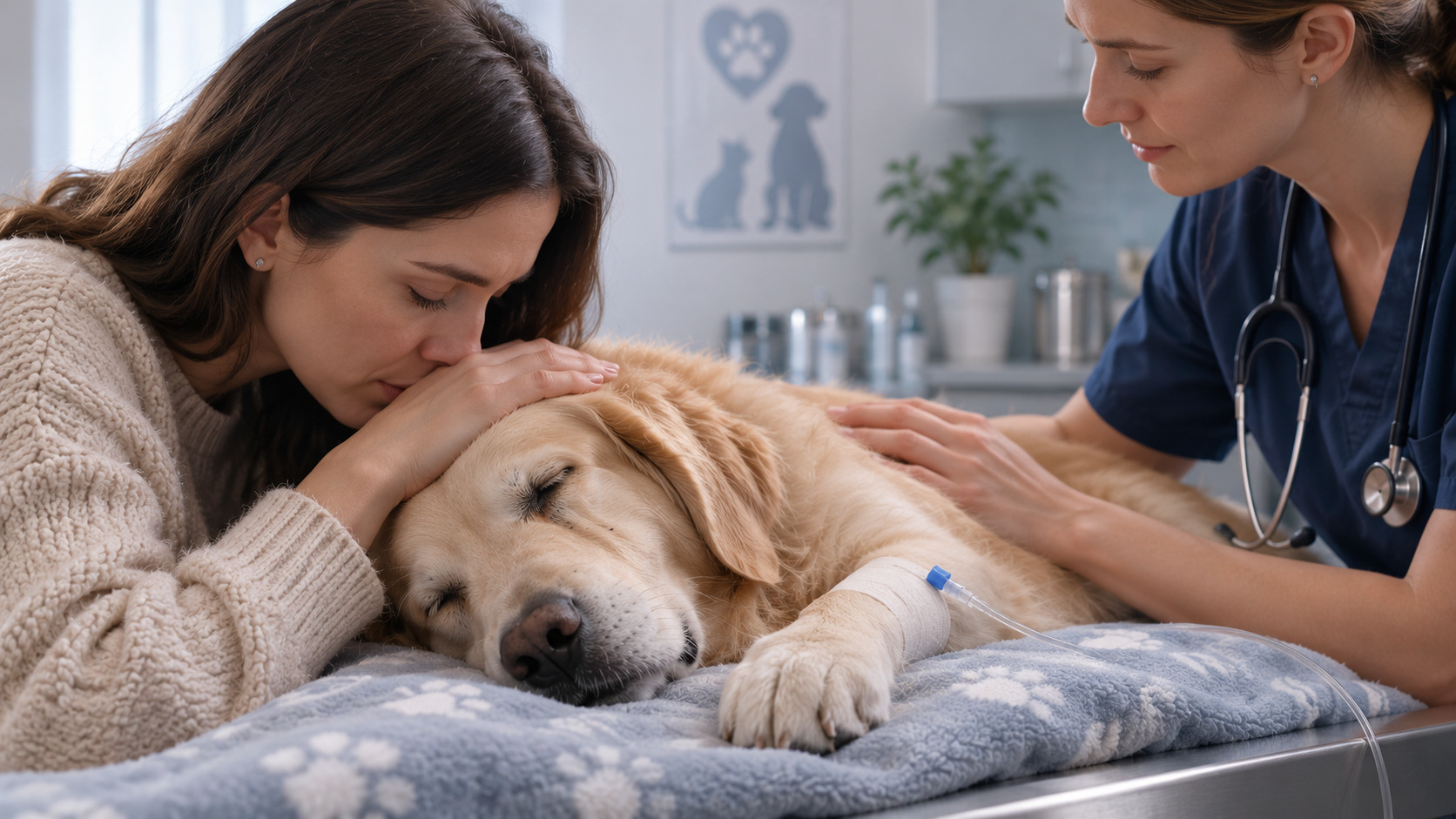
The procedure may vary somewhat depending on the species, the animal's condition, the location, and the veterinary protocol. There is no single sequence that is absolutely identical for every patient. However, the main principles remain the same: the veterinarian assesses the animal's condition, discusses the process with the owner, aims to minimise stress and pain, then carries out the procedure in a controlled way and confirms death.
Before euthanasia, it is important to ask the veterinarian to explain exactly what will happen in the individual case. Understanding the sequence of events is important not only practically but also emotionally. When the owner knows what to expect, unusual movements or changes in breathing are less likely to come as a shock. AAHA specifically recommends that the veterinary team explain each stage to the owner and describe what they may expect.
1. Veterinary Examination and Consultation
The first stage is an assessment of the animal's condition. This is particularly important when the final decision has not yet been made. The veterinarian evaluates the diagnosis, progression of the disease, prognosis, response to previous treatment, level of pain, and other symptoms.
The veterinarian also considers whether realistic ways of improving quality of life remain available. Sometimes adjusting pain relief, treating nausea, changing the diet, supporting mobility, or introducing other palliative measures may allow the animal to continue living for some time without significant suffering. In other situations, the condition has already become so severe that additional interventions would only prolong the dying process without providing a meaningful improvement in well-being.
At this stage, the owner has the right to receive clear information about the prognosis and possible scenarios. It is important to ask what may happen over the following days or weeks, which symptoms could develop, how effectively they can be controlled, and what might happen if the decision is postponed.
If, after discussion, the owner decides to proceed with the procedure, the veterinarian explains its stages, possible reactions from the animal, the role of sedation, options for the family's presence, and what will happen after death. The decision should be made consciously and without psychological pressure.
2. Preparing the Animal for the Procedure
Preparation depends on where the procedure takes place and on the patient's condition. In a veterinary clinic, it is preferable for the procedure to take place in a quiet room without unnecessary movement of staff or other animals. At home, a place can be chosen where the pet feels safest, such as its bed, favourite blanket, or another familiar area.
Owners are usually allowed to remain nearby if they wish. They can stroke the animal, speak calmly to it, hold its paw, or simply sit beside it. For many dogs and cats, the presence of a familiar person is an important factor that can help reduce anxiety.
At the same time, the physical condition of some patients may require particularly careful handling. For example, an animal experiencing breathlessness may tolerate certain body positions poorly, while an animal in severe pain may feel uncomfortable when lifted or restrained. The veterinarian helps find the most comfortable position possible.
Depending on the chosen protocol and the animal's condition, the veterinarian may prepare venous access. The use of an intravenous catheter often allows medications to be administered in a controlled way without the need for repeated procedures. However, the specific technique is determined individually by the veterinarian.
AAHA recommendations for end-of-life care emphasise minimising pain, anxiety, and unnecessary physical restraint. Owners should also be given the opportunity to remain with their animal during the procedure if they wish.
3. Sedation and Falling Asleep
Before the final stage, the veterinarian often administers a sedative or anaesthetic medication. The purpose of sedation is not to cause death, but to help the animal relax and reduce anxiety and awareness of the surrounding events.
After the medication is administered, the response may be gradual. At first, the animal becomes calmer, moves less, and may lower its head or lie down. The sleep then becomes deeper. The speed of this process can vary depending on the animal's condition, the protocol being used, and the route of administration.
Some animals may briefly show unusual reactions while transitioning into sedation, such as changing body position, vocalising, experiencing nausea, or displaying other signs. These do not necessarily indicate severe pain. This is why the veterinarian monitors the animal's condition and adjusts their actions when necessary. AAHA notes that pre-euthanasia sedation or anaesthesia can reduce anxiety, pain associated with the underlying disease, and the need for physical restraint, although each patient's response may differ.
Once sedation has deepened sufficiently, the animal no longer perceives the situation in the same way as when awake. To the owner, this stage may look like ordinary deep sleep. They can remain nearby, stroke their pet, and talk to them.
It is important to understand that the specific protocol is determined by the veterinarian. Animals at the end of life can be in very different conditions: one may still have relatively normal circulation, while another may have severely impaired circulation; one patient may be calm, while another may be experiencing severe breathlessness or pain. For this reason, the procedure should not be carried out according to a universal "home method" or without professional supervision.
4. Administration of the Euthanasia Medication
Once the veterinarian has confirmed that the animal is in a sufficiently deep and calm state, the final stage takes place. The veterinarian administers a specialised euthanasia medication using a method appropriate for the individual patient.
The medication acts by rapidly suppressing the functions of the central nervous system. The animal loses consciousness, after which breathing stops and the heart subsequently stops beating. When the procedure is performed correctly, this process takes place under the supervision of a veterinarian.
For the owner, the transition may sometimes be almost unnoticeable. The animal is already lying with its eyes closed or partially open after sedation, and after the final medication is administered, breathing gradually stops. In other cases, individual reflex breaths or movements may occur, which the veterinarian should explain in advance.
The moment of death should not be judged solely by appearance. Even when the animal has stopped breathing or moving, death must be formally confirmed by the veterinarian.
5. Confirmation of Death by the Veterinarian
After administering the medication, the veterinarian checks for the absence of a heartbeat and breathing and evaluates other signs required to confirm death. Only then does the veterinarian inform the owner that the procedure is complete.
There is no need to leave the room immediately. In clinics where this is possible, families are given time to remain alone with their pet. This may be for a few minutes or longer, depending on the rules of the particular facility and the person's wishes.
Some people want to stroke the animal, speak to them, leave a flower nearby, or simply sit beside them. Others find it psychologically very difficult to remain after death has been confirmed and prefer to leave immediately. Both reactions are possible, and there is no universally "correct" way to say goodbye.
Does an Animal Feel Pain During Euthanasia?
One of the main reasons owners fear the procedure is the thought that their pet may experience pain or fear. This is why modern principles of humane euthanasia focus on minimising pain, anxiety, and awareness of what is happening.
Pre-euthanasia sedation or anaesthesia helps the animal relax and enter a state of deep sleep before the final stage. It may also reduce pain associated with the serious underlying condition and decrease the need for physical restraint. AAHA recommends considering pre-euthanasia sedation or anaesthesia for companion animals, particularly when owners are present during the procedure.
At the same time, it is not appropriate to promise that every procedure will look exactly the same for every animal. A critically severe condition, circulatory problems, dehydration, breathlessness, or other issues can affect how quickly medications take effect and the body's visible responses. A professional veterinarian takes these factors into account and adapts the procedure to the individual patient's condition.
Brief discomfort may be associated with the procedure itself, for example with placement of a catheter or an injection. The veterinary team's task is to make even these stages as calm as possible.
The main difference with humane euthanasia is that the process is controlled by a medical professional and is specifically intended to end suffering without a prolonged period of painful dying.
Where Can Euthanasia Be Performed - at a Clinic or at Home?

Euthanasia can be performed in a veterinary clinic or at home if the service is available and the veterinarian considers the home setting appropriate in the individual situation. There is no universal option that is always better. The choice depends on the animal's condition, the availability of veterinary care, and the family's needs.
In a clinic, the veterinarian has access to staff, equipment, and medications in a familiar professional environment. This can be particularly important when the animal's condition is unstable or when additional medical procedures are required. Many clinics try to carry out euthanasia in separate quiet rooms so that the family does not have to remain in the usual waiting area with other patients.
For some animals, one disadvantage of the clinical setting is the journey itself. A cat that is afraid of a carrier or a dog that finds walking and getting into a car difficult because of pain may experience additional stress. If the animal is already critically ill, transportation may also be physically difficult.
At-home euthanasia allows the pet to remain in familiar surroundings. Their bed, familiar smells, and loved ones can remain nearby. There is no need to travel to a clinic or wait in an unfamiliar room. For the family, this format can also provide greater privacy and more time to say goodbye.
AAHA notes that performing euthanasia at home can avoid the stress of transportation, allow the animal to remain in familiar surroundings, and provide the family with greater privacy. The fundamental principles of humane euthanasia remain the same as in a clinic.
It is best to discuss the location with the veterinarian in advance. In certain situations, the veterinarian may recommend a clinic because of the patient's condition or technical aspects of the procedure. In other cases, the home setting may be entirely appropriate.
What Might an Owner See During and After the Procedure?
Even when euthanasia has been performed correctly and the animal has already lost consciousness, the body does not always become completely still immediately. For someone who is unaware of the possible physiological responses, this can be a very difficult and even distressing moment.
One possible response is an occasional deep breath after loss of consciousness. These are sometimes referred to as agonal or reflex respiratory movements. They are associated with automatic processes in the body during death and do not in themselves mean that consciousness has returned. AAHA notes that such reflex breaths can occur during euthanasia and that preparing owners for possible perimortem responses is an important part of the process.
Small twitches of individual muscles or limbs may also occur after the veterinarian has already confirmed death. These are not conscious movements. Veterinary materials from VCA explain that muscle contractions may occasionally occur after death and are not the result of conscious activity by the animal.
The eyes do not necessarily close after death. They may remain partially or completely open. This is a normal physiological feature and does not mean that the animal is aware of its surroundings.
Because the muscles relax, involuntary urination or defecation may occur. A small amount of fluid or air may sometimes also be released. These changes result from the loss of muscle control after death.
The body remains warm and soft for some time. Changes associated with rigor mortis do not develop immediately. Owners therefore do not need to be alarmed if their pet's body is still warm immediately after death has been confirmed.
A conversation with the veterinarian beforehand can help prevent normal reflexes from being interpreted as signs that the animal was suffering. If any response occurs during the procedure that frightens the owner, they should immediately ask the veterinarian to explain what is happening.
Should You Stay with Your Pet During Euthanasia?
Many people want to remain nearby until the very end. They hold the animal, stroke them, speak in a familiar voice, or simply sit beside them. For the owner, this can be an important way to say goodbye, while for the animal, the presence of a familiar person may help create a sense of a familiar environment.
Veterinary recommendations support an owner's option to remain present if they wish. AAHA recommends allowing people to hold or comfort their animal during the procedure and, where possible, allowing the family to remain with the pet throughout all stages.
However, being present should not become a moral obligation. Some people find it psychologically extremely difficult to witness the moment of death. Some want to stay only until their pet falls asleep after sedation. Another person may prefer to say goodbye before the procedure.
Veterinary guidelines also specifically emphasise that a person's decision not to be present should be respected and should not be made a source of guilt.
If the owner decides to leave after sedation, arrangements can be made with the veterinarian in advance so that the animal is not left alone and a member of the veterinary team remains nearby.
Likewise, there is no single rule regarding the presence of children. The decision depends on the child's age, psychological readiness, relationship with the animal, and desire to be present. If a child will take part in the farewell, it is better to explain in advance, using simple and direct language, what will happen without creating the false impression that the animal will simply fall asleep and later wake up.
How to Prepare for Your Pet's Euthanasia
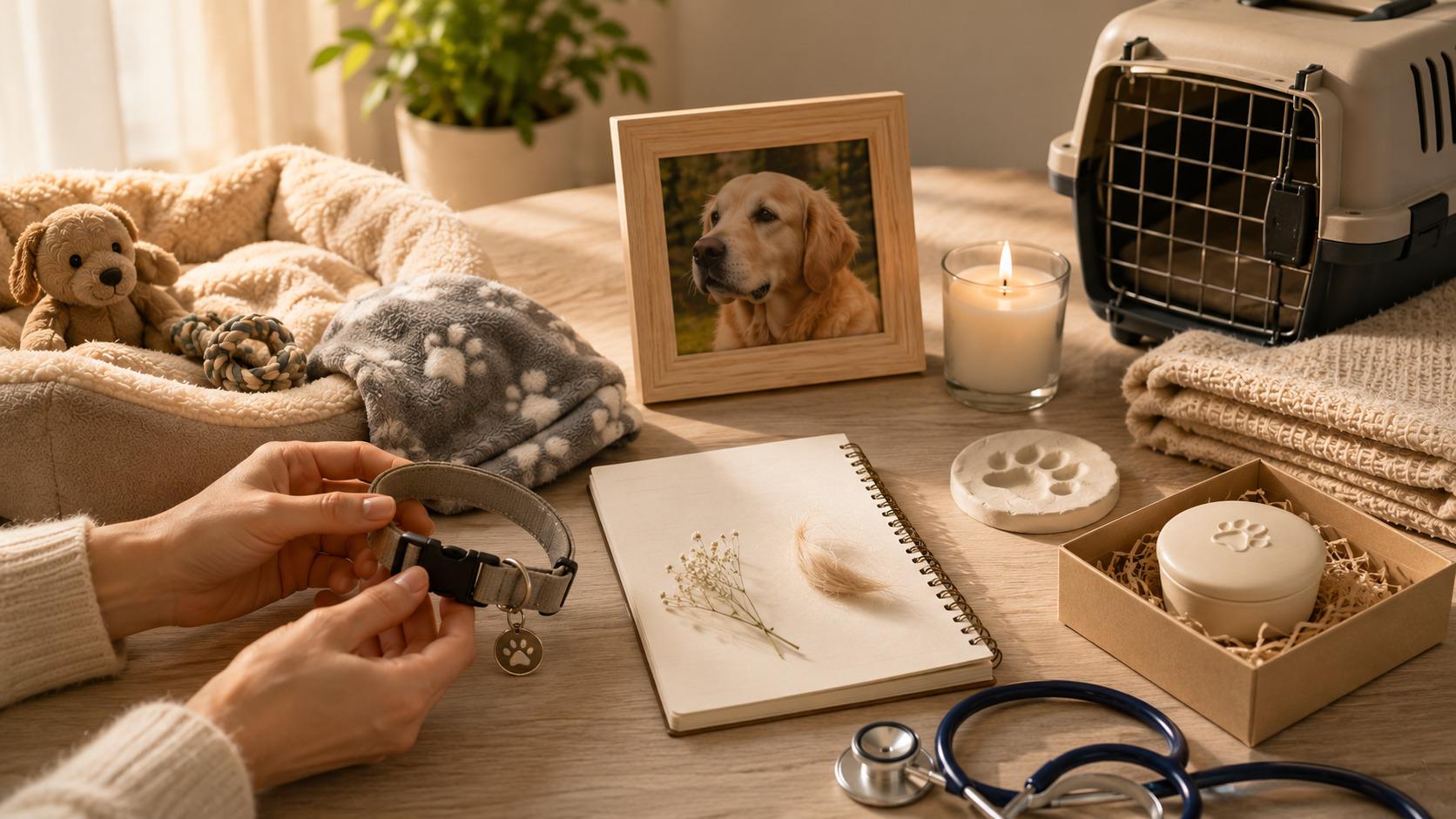
Preparation does not make the decision itself easier, but it can reduce the number of organisational questions that need to be addressed at a time when the family may find it difficult to concentrate. If the animal's condition allows the procedure to be planned, it is worth discussing the entire process with the veterinarian in advance rather than only the medical aspects.
Before the procedure, it can be helpful to clarify the following questions:
- where euthanasia would be best performed in the individual case - at the clinic or at home - and whether a home visit from a veterinarian is available;
- how sedation and the final stage will be carried out, whether an intravenous catheter will be placed, and which physical responses may be noticeable;
- which family members want to be present and whether they can remain with the animal throughout the entire procedure;
- whether a favourite blanket, bed, toy, or another familiar object can be brought if it may help create a calmer environment;
- what will happen to the body after the procedure, how transportation will be arranged, and which option for cremation or another form of farewell the family chooses;
- whether the owner would like to keep a paw print, a lock of fur, a collar, or another keepsake in advance.
Where possible, practical decisions concerning the body are better made before the procedure. Immediately after death, the owner may find it significantly more difficult to discuss logistics, cremation, documents, or transportation.
If euthanasia is planned because of a severe incurable illness, it is also worth discussing an emergency plan with the veterinarian. For example, what to do if the animal's condition suddenly deteriorates during the night, where to seek help in cases of severe breathlessness or uncontrolled pain, and which symptoms mean it is no longer appropriate to wait until the scheduled procedure. Such a plan can help avoid a situation in which the animal remains without adequate symptom control for an extended period.
What Happens After Euthanasia?

After the veterinarian has confirmed death, the owner is usually given time to say goodbye. There is no need to rush. The family can remain nearby for as long as the clinic or home procedure arrangements allow.
The next practical question concerns the body. One common option is cremation. It may be individual or communal. With individual cremation, the animal is cremated separately, allowing the ashes to be returned to the owner. With communal cremation, several animals are cremated together, so it is not possible to receive the individual ashes of a particular pet.
Spogad works with pet ashes and individual memorial options. The service also states that video confirmation of stages of the process can be provided on request, and the ashes can later be used to create a memorial piece.
If the family has not yet decided what to do next, the decision does not necessarily have to be made in the first few minutes after death. It is worth asking the clinic or service provider in advance how much time is available to make a choice and how the body will be temporarily cared for.
When death has occurred at home or some time is required before the transport service arrives, it is important to organise temporary care of the body appropriately. General information and support related to pet loss can be found in the Spogad Blog.
After individual cremation, the owner may keep the ashes in an urn, use them to create a memorial item, or choose another personal way of preserving the pet's memory. There is no universal option: what matters is choosing the form that is meaningful to the individual family.
How to Cope with the Decision to Euthanise a Pet
After euthanasia, doubts often become part of the pain of loss. A person may repeatedly return in their thoughts to the final days and wonder whether the decision was made too early. Another common thought is that perhaps the procedure should have been chosen sooner so that the animal would not have had to go through one final severe crisis.
These doubts are understandable because the point at which quality of life becomes unacceptable can rarely be identified precisely to a particular day or hour. The condition of many chronically ill animals fluctuates: a very bad day may be followed by a relatively good one, and a crisis may be followed by a short-term improvement.
For this reason, it is better to evaluate the decision in terms of the overall picture rather than a single moment: the prognosis, level of suffering, ability to control symptoms, number of comfortable days, and the veterinarian's professional assessment. In this context, the purpose of pet euthanasia is not to shorten life for convenience, but to prevent further suffering when available ways of helping the animal have been exhausted.
Feelings of guilt may also be connected with the fact that the final decision is made by a person. Psychologically, this differs from a situation in which death occurs naturally and the owner has no control over the timing. However, veterinary end-of-life care specifically involves evaluating whether treatment and palliative support can continue to provide an acceptable level of comfort. When they can no longer do so, the veterinarian may recommend euthanasia as a way to end suffering.
There is no established period within which a person is expected to "get over" the death of a pet. The response depends on the length of the relationship, the circumstances of the death, the person's individual experience, and the support available around them. Sadness, crying, a sense of emptiness, repeatedly thinking about the final day, or instinctively expecting the animal to be waiting by the door can all be part of grieving a loss.
There is also no need to force yourself to remove all of your pet's belongings immediately or, conversely, to keep them if doing so causes overwhelming pain. For one person, it may feel important to put away the bowls and bed straight away, while another may need weeks or months. Ways of preserving memories can also differ: photographs, a paw print, an urn with ashes, a memorial object, or another personal item.
Stories from other people who have experienced the loss of a pet can be found among Spogad client stories.
If grief remains so intense for a prolonged period that the person is barely able to sleep, work, eat, or carry out everyday tasks, seeking professional psychological support may be appropriate. The loss of an animal can be a significant bereavement, particularly when the pet has been a constant part of daily life for many years.
Conclusion
Pet euthanasia is a difficult medical and emotional decision that should be made with consideration of the animal's actual condition, prognosis, level of suffering, and available treatment or palliative care options. Advanced age or a serious diagnosis alone is not enough to determine whether the time for the procedure has come.
Humane euthanasia is performed by a veterinarian under controlled conditions. The process usually includes assessment of the animal's condition, discussion of the decision with the owner, preparation, sedation or anaesthesia, administration of the euthanasia medication, and confirmation of death. The exact protocol depends on the individual patient and the veterinary procedure being used.
Owners should know in advance not only the main stages of the procedure but also the possible natural responses of the body. Occasional reflex breaths, small muscle contractions, or open eyes after loss of consciousness or death do not necessarily indicate pain or awareness of what is happening. Discussing the procedure with the veterinarian beforehand can help prepare the owner for these moments.
There is also no single correct way to say goodbye. Some people want to remain beside their pet until the final moment, while others say goodbye after sedation. Some families choose a clinic, while others choose euthanasia at home. The main consideration is the possibility of making the animal's final moments as calm as possible, without unnecessary fear or suffering.
If your pet's condition is deteriorating rapidly or you are already considering euthanasia, it is worth discussing the situation with a veterinarian. A professional assessment can help determine whether there are still options for maintaining an acceptable quality of life and which form of care would be the most humane in the individual situation.