
Skin diseases in cats are among the problems that owners often do not notice immediately. A cat may hide discomfort for a long time, while the first changes can look minor: the animal starts grooming more often, scratches a little more than usual, develops dandruff, isolated scratches, or a small area of thinning coat. However, these subtle signs may be the beginning of a dermatological problem that affects not only appearance but also comfort, sleep, appetite, behavior, and overall well-being.
A cat’s skin performs an important protective function: it participates in thermoregulation and protects the body from irritants, microorganisms, parasites, and mechanical damage. When this barrier is disrupted, the animal may feel itching, pain, burning, or constant irritation. This is why regular observation of a cat’s coat, skin, behavior, and grooming habits helps owners notice changes earlier, contact a veterinarian in time, and reduce the risk of complications.
It is important to understand that skin diseases in cats should not be treated only based on photos, symptom descriptions, or advice from forums. The same external signs may have different causes: for example, bald patches in a cat may appear because of fleas, allergy, fungal infection, stress, excessive grooming, or pain in a specific area of the body. Therefore, early symptom detection must be combined with proper diagnosis, not with random use of ointments, shampoos, or human medications.
What Are Skin Diseases in Cats?
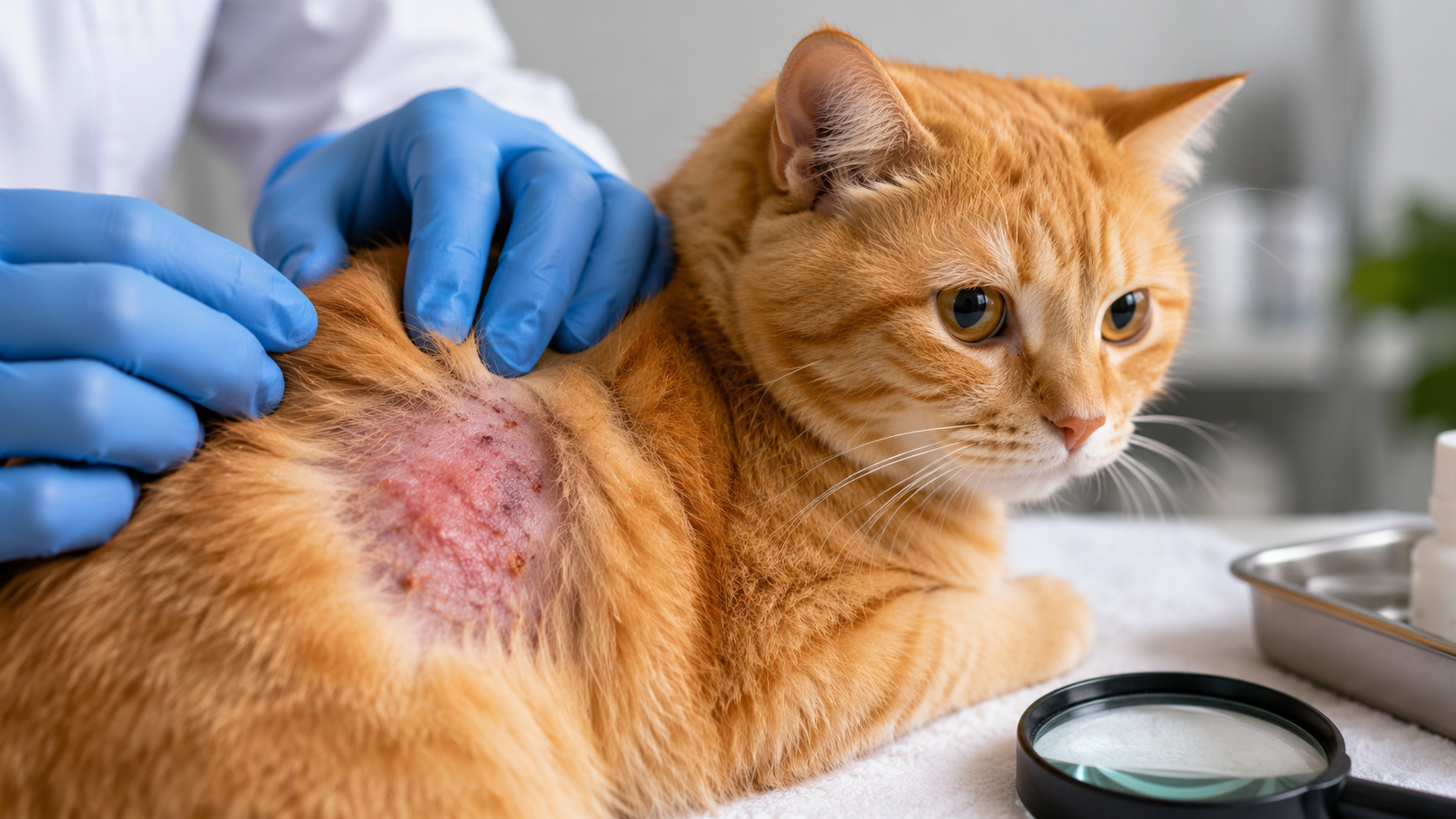
Skin diseases in cats are a group of conditions that affect the skin, coat, hair follicles, sebaceous glands, or the outer protective layer of the skin. They may cause itching, redness, flaking, rashes, crusts, wounds, hair loss, odor changes, pain, or discharge. Sometimes the problem is local and limited to the chin, ears, tail, belly, or paws. In other cases, the changes may spread across a larger part of the body.
The causes of these conditions can vary. Cats commonly develop reactions to flea bites, food or contact allergies, fungal skin diseases, parasitic infestations, bacterial infections, acne, seborrhea, and inflammation after scratches or wounds. In some animals, the skin reacts to stress, a change of food, moving to a new home, the appearance of another animal, or a lack of stable care. Dermatological symptoms may also be secondary, meaning that the skin is affected not by an isolated skin problem but by another condition in the body.
Another difficulty is that cats are active groomers. They may lick the coat, remove visible signs of irritation, and temporarily hide the problem. Because of this, an owner may notice not the beginning of a disease, but its consequences: hairless areas, crusts, moist lesions, irritation, or wounds on the cat’s skin. That is why regular examination of the coat, skin, ears, belly, neck, and the area near the base of the tail should be part of routine care.
Main Symptoms of Skin Diseases in Cats
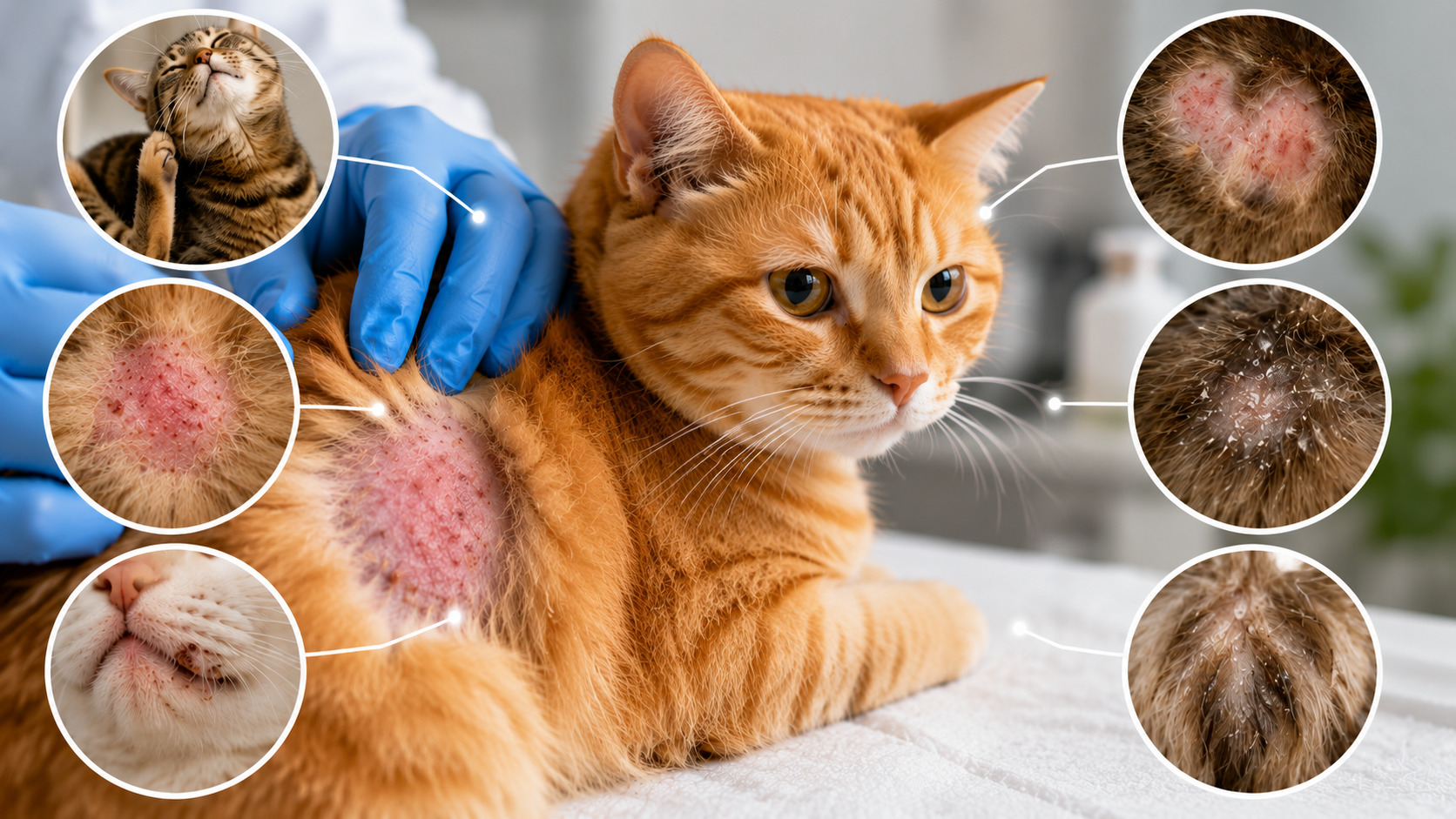
Signs of dermatological problems may be obvious or almost unnoticeable. Some cats show intense itching: they scratch often, rub against furniture, twitch their skin sharply, bite their paws or tail. Others behave more quietly but start licking the belly, sides, or inner thighs more frequently. If this behavior repeats every day, it should not be dismissed as normal cleanliness.
Symptoms that require attention include changes in coat texture, scales, dandruff, redness, rash, scabs, thickened areas, black dots on the chin, unpleasant odor, or painful areas. If a cat does not allow a certain place to be touched, hides, becomes irritable, or loses appetite, this may indicate not only itching but also pain or inflammation.
Itching and Excessive Grooming
Itching is one of the most common signs that something is wrong with a cat’s skin. It may be mild, when the animal simply scratches more often, or severe, when the cat chews the coat, scratches the skin until it bleeds, constantly licks one area, or wakes up because of discomfort. Owners often notice not the itching itself, but its consequences: broken hairs, bald patches, scratches, crusts, irritation around the neck, head, tail, or belly.
Excessive grooming does not always mean “nerves” or habit. A cat may react this way to flea bites, mites, allergic inflammation, fungal infection, skin inflammation, joint pain, or other internal causes. If the animal licks the same area every day, the skin under the coat should be checked. Even if it looks clean, the problem may be hidden, and itching may be the first sign of disease.
Redness, Rashes, and Skin Irritation
Skin redness in a cat may appear after scratching, an insect bite, contact with an irritant, an allergic reaction, or the beginning of an infection. Sometimes it looks like a small pink spot, and sometimes it is accompanied by a rash, flaking, crusts, moist areas, or tenderness. Particular attention should be paid to places where the coat is dense and symptoms are easy to miss: the neck, armpits, belly, base of the tail, and inner thighs.
Rashes may be small, firm, and feel like tiny grains under the fingers. In cats, this type of lesion is sometimes associated with miliary dermatitis, which may occur against the background of allergy, parasites, or other irritants. If a rash is combined with itching, dandruff, unpleasant odor, or hair loss, home observation should not be prolonged. The longer a cat scratches an irritated area, the higher the risk of secondary bacterial infection.
Hair Loss and Bald Patches
Hair loss may be diffuse or localized. In the first case, the owner notices more hair on the floor, bedding, or clothing. In the second case, separate hairless areas appear on the belly, paws, sides, near the tail, around the eyes, or on the ears. Bald patches in a cat do not always mean that the hair “fell out” by itself. Very often, the animal breaks or pulls out the hair with its teeth and tongue because of itching or discomfort.
Alopecia in cats may have allergic, parasitic, fungal, behavioral, or another origin. For example, with flea allergy, the coat often becomes thinner near the base of the tail, on the back, or on the thighs. With fungal infection, round areas with broken hairs, flaking, and crusts may appear. With stress-related grooming, the skin may look relatively clean, but the coat becomes short, as if trimmed. It is difficult to distinguish these conditions without examination and diagnosis.
Main Causes of Skin Diseases in Cats
Skin diseases in cats may develop due to external and internal factors. External factors include fleas, mites, fungi, bacteria, irritating cleaning products, unsuitable shampoos, dust, pollen, cat litter, or contact with an infected animal. Internal factors may include food sensitivity, individual allergic reactions, weakened immune defense, hormonal disorders, pain, chronic stress, or an unbalanced diet.
In practice, one cause often triggers another. For example, a cat may be allergic to flea bites, scratch the skin because of itching, and bacteria may enter the scratches. In this way, the initial allergic reaction becomes complicated by inflammation. Or an animal may have a fungal lesion, while the owner tries to treat it with unsuitable products, causing even stronger irritation and delaying diagnosis. This is why any treatment should begin with identifying the cause.
The Most Common Skin Diseases in Cats
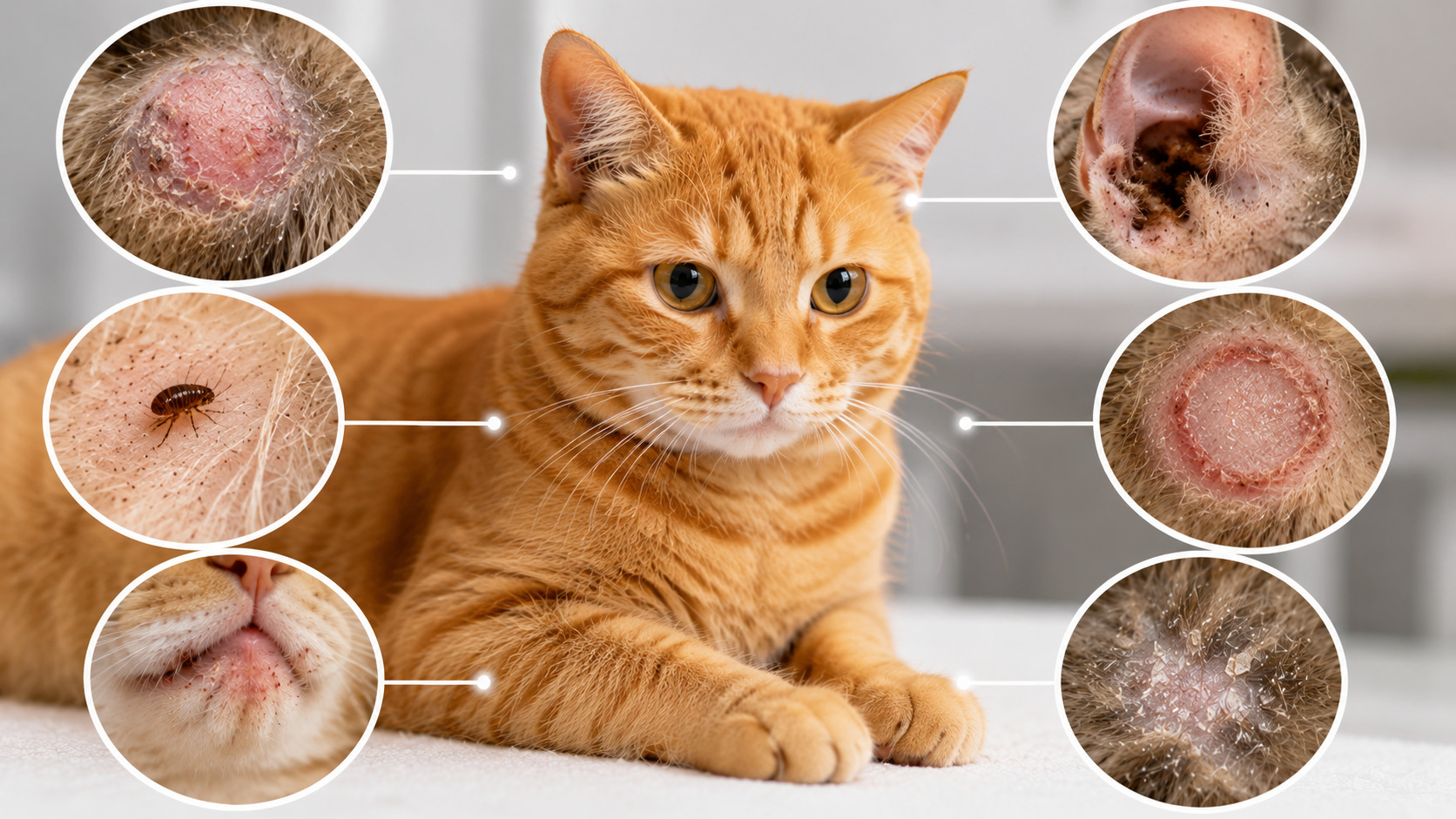
Different dermatological diseases may look similar. Itching, bald patches, redness, dandruff, or crusts do not point to one exact diagnosis. They only show that the skin is reacting to irritation, inflammation, or damage. Therefore, a veterinarian may recommend a Wood’s lamp examination, microscopy, skin scraping, cytology, culture, trial parasite treatment, an elimination diet, or other diagnostic methods depending on the symptoms.
It is usually impossible to distinguish dermatitis in a cat from fungal infection, a parasitic problem, or bacterial inflammation without professional evaluation. Extra caution is needed when there are other animals, children, immunocompromised people at home, or when the lesion spreads quickly. Some conditions may be contagious, while others may require long-term and systemic treatment.
Flea Allergy Dermatitis
Flea allergy dermatitis develops when a cat’s body overreacts to components of flea saliva. For a sensitive animal, even a few bites may cause intense itching, irritation, crusts, hair loss, and scratches. The owner may not always see the fleas themselves: cats actively groom and may remove parasites from the coat, while the allergic reaction has already started.
The signs are most often visible on the back, near the base of the tail, on the thighs, neck, or head. A cat may suddenly bite itself, lick the belly, lose hair, develop small scabs, or show redness. Flea allergy dermatitis is not solved only by bathing or one-time combing. Usually, a veterinarian-selected parasite control plan is needed for the cat, other animals in the home, and the environment where flea eggs and larvae may remain.
It is important not to use flea products intended for dogs unless a veterinarian has confirmed that they are safe for cats. Some substances tolerated by dogs can be toxic to cats. Several products should also not be combined without consultation: excessive treatment may cause poisoning or severe skin irritation.
Ringworm
Ringworm in cats is a fungal disease that affects the skin, coat, and hair follicles. Despite the name, it is not caused by a worm, but by dermatophytes - fungi that can grow on superficial tissues. In everyday speech, owners may use phrases such as feline ringworm or cat ringworm, but from a veterinary point of view, the more precise term is dermatophytosis.
A typical sign is a round area with thinning or missing hair, flaking, broken hairs, crusts, or redness. Lesions may appear on the face, ears, paws, tail, or other parts of the body. However, not every case looks like a “round spot”, and some cats may carry the fungus with minimal symptoms. For this reason, the diagnosis should not be made based only on appearance.
Fungal skin diseases in cats are important because they may spread to other animals and people. Families with children, elderly people, or people with reduced immune protection should be especially careful. Treatment may include topical products, systemic antifungal medications, and environmental cleaning, but the exact plan should be chosen by a veterinarian after the diagnosis is confirmed.
Allergic Dermatitis
Allergic dermatitis in cats may be related to food, insect bites, dust, pollen, household chemicals, cat litter, laundry products, medications, or other irritants. In cats, allergy does not always look the same as in people. Instead of a runny nose or watery eyes, the animal may have itching, rashes, bald patches, crusts on the neck, head, back, or belly, as well as recurring skin or ear inflammation.
Finding the cause of allergy often takes time. If a food reaction is suspected, a veterinarian may recommend an elimination diet with strict control of all food, treats, and supplements. If an environmental reaction is likely, it is important to assess seasonality, household changes, new cleaning products, renovation, new litter, or the appearance of other animals. Frequent food changes without a plan may only confuse the picture.
Sometimes owners call any irritation eczema in cats. In everyday language, this may describe moist, red, or inflamed areas of skin, but it is not an exact diagnosis. It is safer to talk about inflammation, dermatitis, or a skin lesion and contact a veterinarian to determine the true cause. Allergy, infection, parasites, or trauma from itching may hide behind the same external sign.
Parasitic Skin Diseases
In addition to fleas, mites and other parasites may affect the condition of a cat’s skin. They can cause itching, inflammation, crusts, ear irritation, hair loss, pain, or secondary infections. Some parasitic lesions are visible to the naked eye, but many require microscopic examination or other diagnostic methods.
Severe itching around the ears, dark discharge in the ear canal, constant head shaking, scratches on the neck, crusts on the face, paw lesions, or rapidly spreading irritation should be especially concerning. If several animals live in the home, a parasitic problem may pass from one animal to another. Therefore, treating only the cat with visible symptoms is not always enough.
Parasite prevention should be regular but safe. The frequency of treatments, type of product, and dosage depend on the cat’s age, weight, health condition, lifestyle, and the presence of other animals at home. For an indoor cat that does not go outside, the risk is lower, but not zero: fleas or their eggs may be brought in on shoes, clothing, or belongings.
Bacterial Infections and Pyoderma
Bacterial skin infections in cats often develop as a complication of another problem. When an animal scratches, bites, or licks the skin, the protective barrier is damaged. Bacteria that would not normally cause inflammation may enter these micro-injuries. This can lead to redness, pain, crusts, pustules, moist areas, or an unpleasant odor.
Pyoderma in cats is less common than in dogs, but it still requires careful attention. It may be superficial or deeper, local or widespread. If there are pus-filled lesions, open wounds, swelling, bloody or purulent discharge on the skin, home treatments may not be enough. A veterinarian may perform cytology, check whether a bacterial complication is present, and prescribe topical or systemic treatment.
Antibiotics or hormonal ointments should not be used without veterinary guidance. An unsuitable product may temporarily reduce redness but fail to eliminate the cause, change the clinical picture, and make diagnosis more difficult. In addition, some medications may worsen fungal or parasitic skin problems.
Acne in Cats
Acne in cats most often appears on the chin or lower lip. It may look like black dots, dirt, small comedones, redness, swelling, or painful pustules. At an early stage, the owner may think that the cat simply has food residue on the chin. If the area cannot be cleaned easily or the changes return, a dermatological problem should be considered.
The causes of feline acne may vary: sebaceous gland activity, irritation, insufficient bowl hygiene, microtrauma, bacterial complication, individual predisposition, or other factors. It is often recommended to replace plastic bowls with ceramic, glass, or metal ones and wash them regularly, but this is not always enough. If swelling, pain, blood, pus, or itching appears, a veterinary examination is needed.
A mild form may be controlled with local care, but severe cases require treatment. Comedones should not be squeezed, and the chin should not be treated with aggressive alcohol-based products. The skin in this area is sensitive, and additional irritation may worsen inflammation.
Seborrhea and Coat Condition Problems
Seborrhea in cats is a condition in which the process of skin renewal and sebaceous gland function changes. It may cause dandruff, greasy coat, flaking, unpleasant odor, itching, or redness. Sometimes the coat looks dull, clumped, or dirty, even if the cat generally grooms itself.
Seborrhea may be dry, oily, or mixed. In cats, it is often not an isolated disease but a consequence of another condition: allergy, parasites, infection, nutritional imbalance, systemic disease, or insufficient grooming if the animal has excess weight, pain, or limited mobility. Therefore, treating only dandruff without looking for the cause is not always correct.
For some cats, a veterinarian may recommend special skin-care products, dietary correction, or treatment of the underlying disease. Human shampoos, essential oils, and aggressive antiseptics are not suitable for this. They may disrupt the skin barrier and increase irritation.
When Should You Contact a Veterinarian?
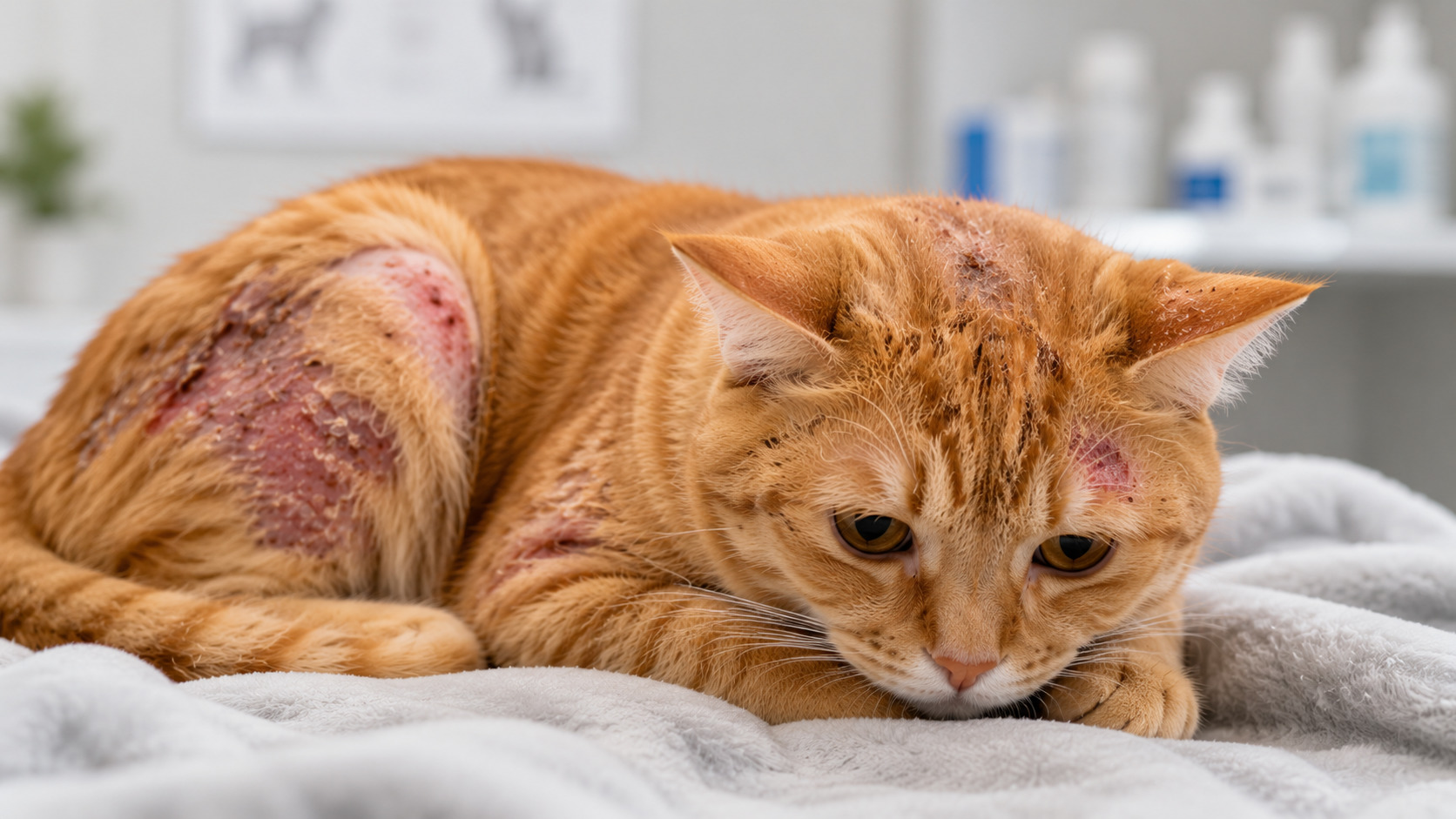
A veterinarian should be contacted not only when the condition already looks serious. Dermatological problems often become chronic if the owner waits too long or treats symptoms with random products. The earlier the cause is identified, the lower the risks for the animal, other pets, and people in the home.
It is especially important not to delay consultation if symptoms worsen quickly, the affected area spreads, the cat scratches itself until it bleeds, becomes lethargic, refuses food, or does not allow a certain area to be touched. A veterinary examination is also needed if fungal infection, parasites, purulent inflammation, or a strong allergic reaction is suspected.
You should contact a specialist if you notice the following signs:
- severe or persistent itching that makes the cat scratch, bite the coat, or prevents normal rest;
- bald patches, round spots, broken hairs, flaking, or crusts;
- redness, swelling, moist areas, pustules, blood, or unpleasant odor from the skin;
- wounds on the cat’s skin that do not heal or become larger;
- black dots, tenderness, or pus-filled lesions on the chin;
- symptoms in several animals at home or skin changes in people after contact with the cat;
- lethargy, reduced appetite, increased sensitivity to touch, or sudden behavioral changes.
During the appointment, a veterinarian may ask about diet, parasite prevention, contact with other animals, recent household changes, seasonality of symptoms, and previous treatment. It is useful for the owner to prepare photos showing changes over time, as well as the names of foods, medications, and products that have already been used. This may help separate likely causes from secondary factors more quickly.
How to Support Healthy Skin and Coat in Cats
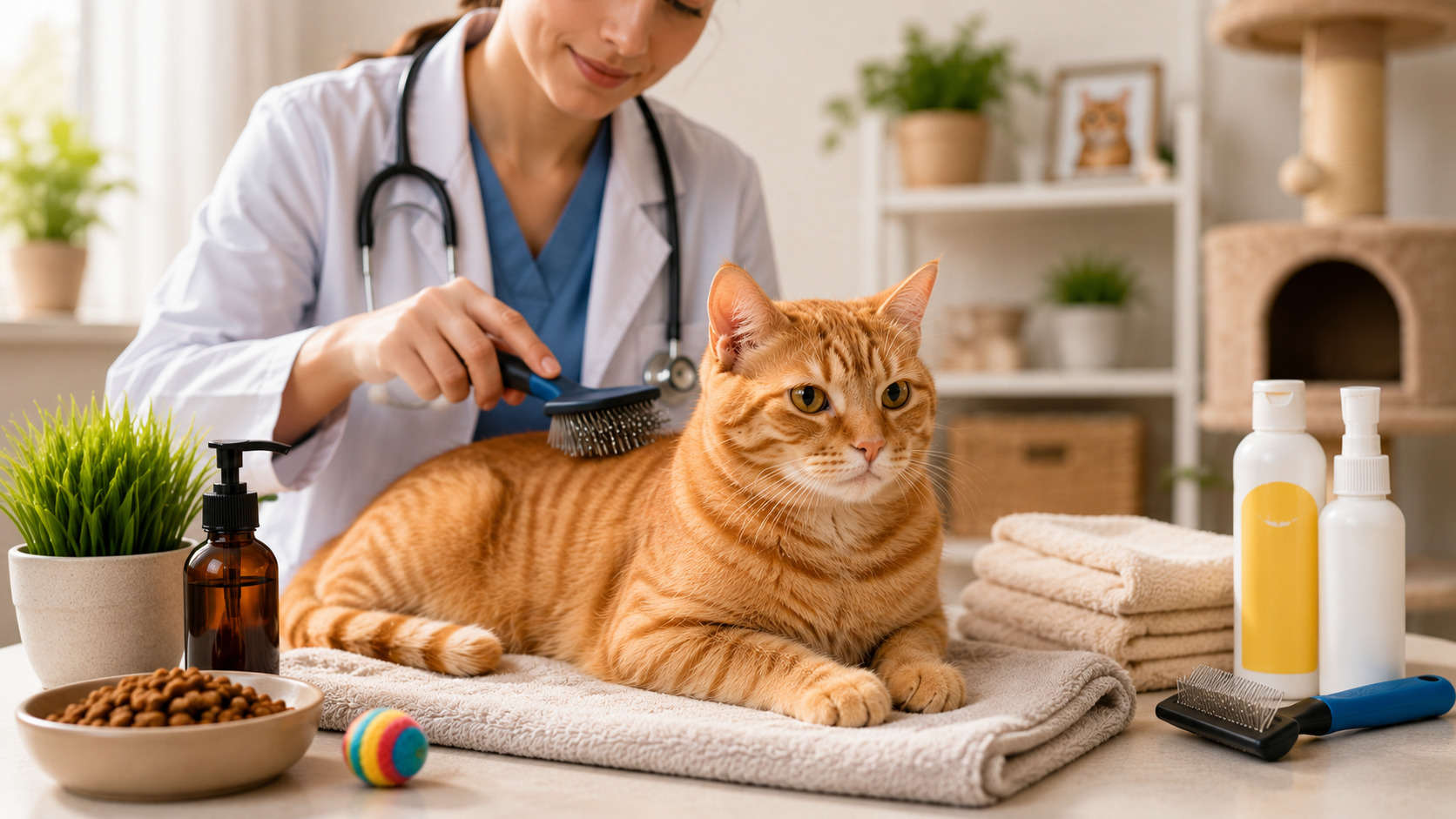
Prevention does not guarantee that a cat will never have skin problems, but it significantly reduces risks and helps detect changes at an early stage. Skin health depends on nutrition, regular care, parasite control, cleanliness of the environment, stress level, and the general condition of the body. If there is not only a cat but also a dog at home, the condition of each animal should be monitored separately, because skin diseases in dogs may have similar external signs but different causes, risks, and treatment approaches.
Basic care should be regular but not excessive. Cats do not need frequent bathing without medical indications, because this may dry out the skin or disrupt its natural protective layer. Instead, coat inspection, gentle brushing, clean bowls, high-quality food, fresh water, and timely veterinary prevention are important.
To support healthy skin and coat, owners should follow these rules:
- Choose a complete diet according to the cat’s age, health condition, and needs, without changing food chaotically or giving supplements without necessity.
- Regularly check the skin under the coat, especially on the neck, belly, near the base of the tail, behind the ears, on the paws, and on the chin.
- Brush the cat according to coat type to reduce dead hairs, tangles, and skin irritation.
- Use flea and parasite prevention only with products that are safe for cats and in a dosage that matches the animal’s weight.
- Wash bowls regularly, especially if the cat is prone to chin acne.
- Avoid aggressive household chemicals, strong fragrances, essential oils, and products that may irritate the cat’s skin or respiratory tract.
- Maintain a stable environment: a comfortable resting place, clean litter box, access to water, an opportunity to hide, and reduced stress factors.
Special attention should be given to senior cats, animals with excess weight, chronic diseases, or limited mobility. They may groom themselves less effectively, causing the coat to clump, the skin to be less ventilated, and irritation to remain unnoticed for longer. In such cases, the owner should examine the cat’s body more often and help with gentle care.
Caring for a Cat During Illness
When a cat is diagnosed with a skin disease, it is important not only to follow the veterinarian’s instructions but also to create conditions in which the animal feels less stressed. Stress may increase grooming, make treatments more difficult, and interfere with recovery. If the cat is afraid of handling, it is better to act calmly, in short sessions, without shouting, force, or sudden movements.
If a veterinarian prescribes topical products, they should be applied exactly as instructed. Some medications must remain on the skin for a certain amount of time, while others should not be licked off. In such cases, a protective collar, medical pet clothing, or supervision after treatment may be needed. If the cat becomes very stressed by a collar, alternatives should be discussed with the veterinarian rather than simply removing protection.
During treatment, bedding, blankets, carriers, and places where the cat often sleeps should be kept clean. If fungal or parasitic infection is suspected, the veterinarian may recommend additional environmental cleaning. In a home with several animals, contact may sometimes need to be temporarily limited to reduce the risk of spreading infection or reinfestation.
It is also important to observe the cat’s emotional state. An animal that feels itching or pain may hide, avoid touch, become irritable, or, on the contrary, seem unusually anxious. This is not “bad character”, but a reaction to discomfort. A calm voice, familiar routine, soft lighting, access to water, a clean litter box, and a safe resting place help a cat tolerate treatment more easily.
If the condition does not improve within the timeframe given by the veterinarian, or symptoms return after the course is completed, the previous treatment should not be repeated without consultation. Recurring dermatological problems may indicate an unresolved underlying cause: allergy, parasites, fungus, chronic inflammation, improper care, or another condition requiring additional diagnostics.
Conclusion
Skin diseases in cats may have many causes: fleas, mites, fungal infections, bacterial inflammation, allergies, seborrhea, acne, stress, or nutritional problems. Their symptoms are often similar: itching, excessive grooming, redness, rashes, flaking, crusts, bald patches, odor changes, or pain. That is why it is important not to guess the diagnosis, but to observe the animal, record changes, and contact a veterinarian in time.
The best approach is a combination of attentive home care and professional diagnosis. Regular skin and coat checks, parasite prevention, balanced nutrition, a clean environment, and stress reduction help support a cat’s health every day. If itching, bald patches, wounds, pus-filled lesions, signs of ringworm, or behavioral changes appear, it is better not to wait. The earlier the cause is identified, the greater the chance of restoring comfort and preventing complications.
Caring for a beloved cat is not only about treatment when a problem is already obvious. It is about daily attention to behavior, mood, skin, coat, and habits. This kind of attentiveness helps notice illness at the beginning, support the cat during treatment, and preserve a calm, safe, and dignified life beside the people who love them.