
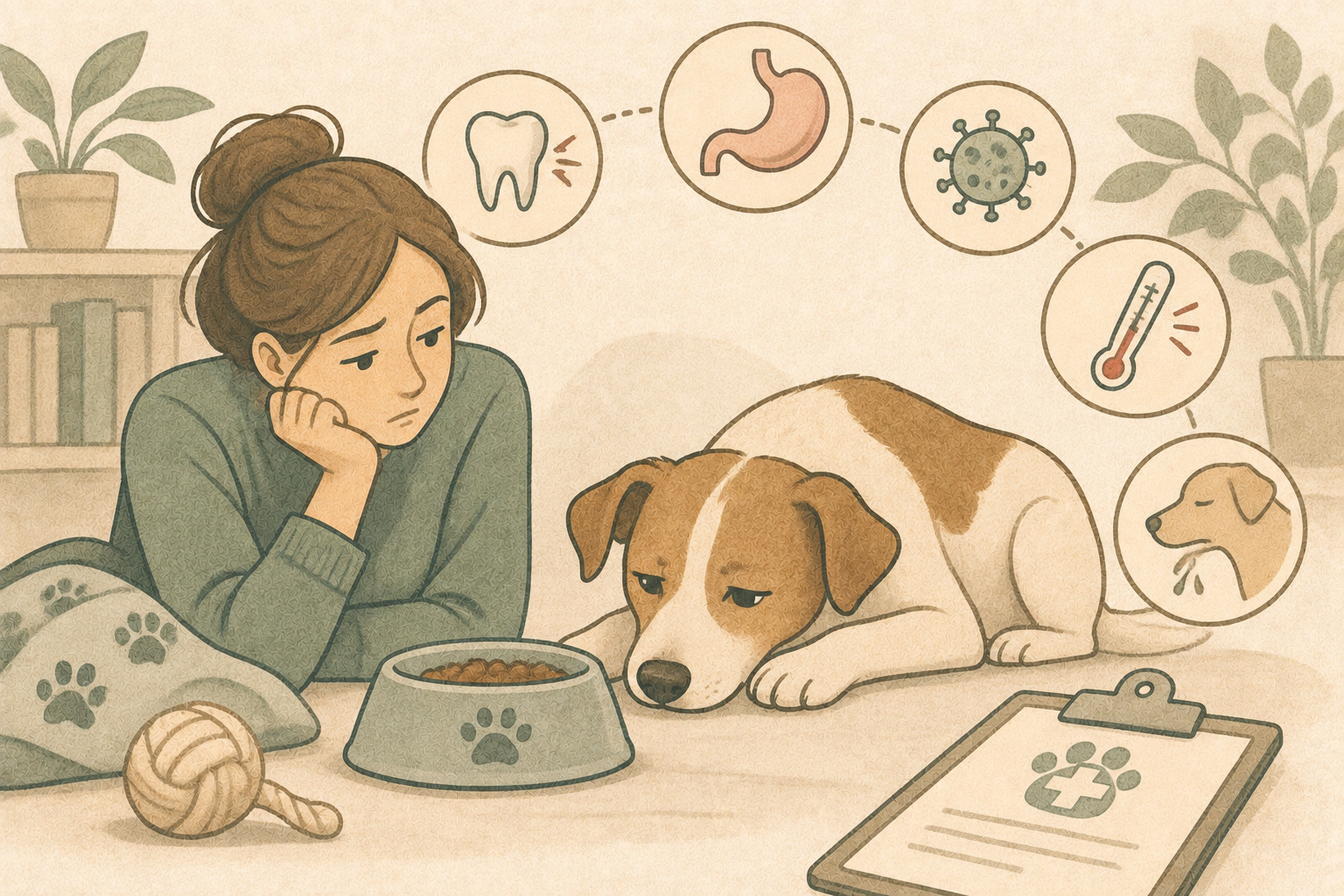
A dog refusing food does not always indicate a serious illness: appetite may temporarily decrease because of stress, a change in environment or routine, hot weather, or short-term discomfort. At the same time, it can be an early sign of pain, digestive problems, infection, dental disease, or dysfunction of the internal organs.
To assess the situation, it is important to consider not only the fact that the dog is refusing food, but also how long it has lasted, water intake, activity level, and behaviour. Missing one meal in an otherwise active adult dog is very different from a complete refusal to eat accompanied by pronounced weakness, vomiting, or pain.
Reasons Why a Dog May Refuse Food

Appetite may temporarily decrease because of stress, changes in environment or routine, hot weather, lower activity levels, or a new food. However, a sudden or prolonged refusal of familiar food should not be explained solely by fussiness. The table below summarises common situations and signs that can help assess the context.
The table can help identify a possible connection between food refusal and changes in a dog's normal routine, but it cannot establish the underlying cause. VCA Animal Hospitals also lists stress, environmental changes, and hot weather among the factors that can affect appetite. If food refusal persists, recurs, or is accompanied by other symptoms, medical causes should be ruled out. The VCA article on loss of appetite provides a more detailed overview of possible factors.
Diseases That Can Cause Poor Appetite

Illness can affect appetite in different ways. Sometimes a dog shows no interest in food at all because of nausea, pain, or general discomfort. In other cases, the dog wants to eat but finds chewing painful or swallowing difficult - veterinarians refer to this as pseudo-anorexia. VCA Animal Hospitals lists infections, systemic diseases, digestive disorders, toxins, and medication side effects among the possible causes of appetite loss. For this reason, pay attention not only to whether the bowl is empty: approaching food and then walking away, dropping food from the mouth, or reluctance to chew may indicate a different problem from a complete lack of interest in food.
Dental and Oral Diseases
Dental problems are one of the reasons a dog may lose interest in food or avoid hard food. Gum inflammation, periodontal disease, damaged or loose teeth, inflammation of the oral mucosa, foreign objects, and other painful conditions can make chewing uncomfortable. Sometimes the owner may think that the dog is not eating because it has no appetite, when in fact the animal is hungry but cannot chew normally. The dog may stand by the bowl for a long time, chew only on one side of the mouth, drop food, refuse dry kibble, or react sharply when someone tries to examine its muzzle.
Typical signs of oral problems include bad breath, excessive drooling, blood in the saliva, and difficulty chewing. The dog may also resist having its muzzle touched. Merck Veterinary Manual notes that inflammatory diseases of the mouth may be accompanied by loss of appetite, pain, drooling, and an unpleasant odour.
Digestive Problems
Diseases of the gastrointestinal tract often affect appetite because they can cause nausea, pain, or problems with the passage of food. Gastritis, gastroenteritis, pancreatitis, ulcerative lesions, intestinal obstruction, and other disorders may be accompanied by refusal of food. Vomiting is one of the main signs of gastritis, and vomit may sometimes contain bile, foam, or blood. Abdominal pain and diarrhoea may also occur. According to Merck Veterinary Manual, intestinal obstruction may cause lethargy, loss of appetite, vomiting, abdominal pain and distension, dehydration, and deterioration of the dog's general condition.
Pancreatitis is also frequently associated with food refusal. In severe cases, commonly described signs include loss of appetite, vomiting, weakness, abdominal pain, dehydration, and diarrhoea, while milder forms may cause less specific symptoms. These signs are also described in Merck Veterinary Manual. Particular attention should be paid to what to do if a dog is not eating and is vomiting. If a dog is not eating and vomiting, it is important to assess the frequency of vomiting and the animal's overall condition. A single episode of vomiting in an otherwise active adult dog does not always indicate an emergency. However, repeated episodes combined with refusal of food, weakness, pain, diarrhoea, dehydration, or blood require prompt veterinary examination.
Infectious and Parasitic Diseases
Viral, bacterial, and parasitic diseases can also cause a decrease in appetite, although food refusal is usually only one of several symptoms. Parvoviral enteritis is particularly dangerous for young dogs that are unvaccinated or not fully vaccinated. Merck Veterinary Manual describes lethargy, anorexia, and fever among the early signs, which may quickly be followed by vomiting and diarrhoea, including bloody diarrhoea.
Canine distemper may also begin with nonspecific signs, including lethargy, fever, and reduced appetite. Discharge from the eyes and nose, coughing, diarrhoea, vomiting, or neurological symptoms may develop later. The course of this infection is also described in the Spogad article “Distemper in Dogs: Symptoms, Disease Progression, and How to Protect Your Pet”. Parasitic infestations can present in different ways: a mild infection with some intestinal parasites may cause no noticeable symptoms at all, while a heavy parasite burden may be accompanied by diarrhoea, weight loss, deterioration in general condition, and changes in appetite. It is therefore impossible to determine whether a dog has intestinal worms based on appetite alone. Merck Veterinary Manual provides more information about the different manifestations of gastrointestinal parasites in dogs.
Diseases of Internal Organs and Other Disorders
Reduced appetite is not limited to diseases of the digestive system. It may occur with kidney or liver disease, certain endocrine disorders, cancer, and other systemic conditions. For example, severe acute kidney injury may be accompanied by weakness, dehydration, vomiting, diarrhoea, ulcers in the mouth, and loss of appetite. These signs are described in the Merck Veterinary Manual article on urinary emergencies in dogs. With liver disease, the signs depend on the specific condition and its severity, while reduced appetite may occur together with weakness, vomiting, weight loss, or changes in the colour of the mucous membranes. Merck Veterinary Manual also lists loss of appetite, vomiting, diarrhoea, jaundice, and weight loss among the possible signs of liver disease.
Appetite often decreases because of pain, even when the source of the pain is not directly related to the stomach or mouth. A dog with back or joint pain, or one recovering from an injury or surgery, may eat less, while some medications can cause nausea or alter appetite. Dogs may experience nausea after anaesthesia, so feeding after surgery depends on the procedure and the clinic's recommendations. VCA Animal Hospitals recommends offering food in smaller portions after surgery to reduce the risk of nausea and vomiting.
Which Symptoms Alongside Food Refusal Should Be a Cause for Concern?

Assess not only appetite but also the dog's overall condition. Refusing one meal in a dog that is playing, drinking water, and behaving normally is very different from a situation in which the dog is not eating, is lying down, is having difficulty breathing, or is vomiting repeatedly. The following symptoms require immediate attention:
- pronounced lethargy, weakness, reluctance to stand, or a sudden change in behaviour;
- repeated vomiting, especially with blood or if the dog cannot keep water down;
- frequent diarrhoea, black stools, or visible blood;
- severe pain, abdominal distension, or a tense abdomen;
- refusal to drink or, conversely, unusually excessive thirst;
- pale, white, bluish, yellowish, or otherwise unusually coloured gums;
- fever accompanied by depression, vomiting, diarrhoea, coughing, or other signs of illness;
- rapid weight loss, difficulty breathing, collapse, or other signs of sudden deterioration.
These symptoms do not point to one specific disease, but they may indicate a condition that requires diagnosis. Merck Veterinary Manual lists extreme lethargy, severe or constant pain, difficulty breathing, bleeding, white or bluish mucous membranes, and refusal of food and water for 24 hours among the reasons for urgent veterinary attention.
For a quick assessment, appetite can be considered together with the dog's overall condition:
The table does not replace a veterinary examination. Even in the absence of obvious danger signs, prolonged or recurrent loss of appetite requires investigation of the underlying cause.
What Should You Do if Your Dog Has No Appetite for a Prolonged Period?
When a dog refuses food, the owner's main task is not to try to make the dog eat at any cost, but to assess its condition, record important changes, and seek professional help in good time. The following steps can be used as a guide:
- Record when the dog last ate normally, whether it is refusing all food or only a particular type of food, and whether it is interested in treats.
- Monitor water intake. It is important to know whether the dog is drinking as usual, much more than usual, very little, or refusing water completely.
- Observe activity, behaviour, vomiting, bowel movements, urination, breathing, and possible signs of pain.
- Do not give human painkillers, antiemetics, antibiotics, or other medicines without veterinary advice. Some medicines commonly used by people are toxic to dogs.
- Do not force-feed the dog without a veterinarian's recommendation, especially if there is vomiting, difficulty swallowing, severe pain, suspected obstruction, or impaired consciousness.
- Contact a veterinary clinic if appetite does not return, the problem recurs, or other symptoms develop. Puppies, older dogs, and animals with chronic diseases may need to be examined sooner.
This approach is more useful than repeatedly switching from one food to another. When a dog does not want to eat because of nausea, pain, or a systemic disease, a new flavour does not address the underlying cause and may only delay diagnosis. Prolonged fasting should not be imposed without veterinary guidance either. In veterinary medicine, the decision to temporarily restrict food depends on the specific condition. For example, Merck Veterinary Manual recommendations on parvoviral enteritis describe gradually reintroducing water and easily digestible food after vomiting has stopped for 12-24 hours. A veterinarian should determine the specific feeding plan for an ill dog.
If a dog completely refuses food, it is important to consider not only how long this has lasted but also its overall condition. VCA Urgent Care recommends seeking veterinary attention if an animal has not eaten for more than 12 hours. Merck Veterinary Manual lists failure to eat or drink for 24 hours as a reason for immediate examination. These are different reference points, not a period that should simply be waited out: if the dog's condition is worsening or other warning signs are present, help is needed sooner.
When Should You Contact a Veterinarian?
A veterinarian should be contacted when appetite loss persists, recurs, or has no obvious short-term explanation. Even without vomiting or diarrhoea, a persistent change in eating behaviour may be an early sign of illness. Do not wait several days if the dog is eating nothing and its condition is gradually deteriorating. According to VCA Animal Hospitals, a change in appetite may be one of the first signs of a health problem, and a dog that refuses food or experiences pain while eating should be examined by a veterinarian as soon as possible.
Emergency care is required in cases of repeated vomiting, blood in vomit or stools, pronounced weakness, collapse, severe or persistent pain, significant abdominal distension, breathing difficulties, seizures, or suspected poisoning. If contact with a toxic substance is possible, do not wait for symptoms to develop. The American Veterinary Medical Association recommends contacting a veterinarian or veterinary poison control service immediately when ingestion of a potentially dangerous substance is known or suspected.
Puppies require particular attention. Because they have smaller energy reserves, a higher risk of rapid dehydration, and greater vulnerability to some infections, the same waiting periods used for a healthy adult dog may not be appropriate. The same applies to very old dogs and animals with diabetes, kidney disease, liver disease, heart disease, or other chronic conditions. It is also useful to know what is normal for your pet. The Spogad article “How to Monitor Your Dog's Health: The Most Common Diseases and Their Symptoms” can help owners understand which changes in behaviour and well-being deserve attention, not only when appetite is affected.
Conclusion
Food refusal may be a short-term reaction to change or a sign of pain or illness. Assess it together with the dog's behaviour, activity level, water intake, and other symptoms. If the problem persists or recurs, contact a veterinarian. Repeated vomiting, blood, severe pain, abdominal distension, pronounced weakness, difficulty breathing, or suspected poisoning require emergency care. Do not give a dog human medication or force-feed it without veterinary advice.